Membranes and meshwork
From performance to performativity: materials’ capacity to transform the situations they inhabit, blurring the edges between matter, media, and the body.
A visual review of experiments with wearable computing, e-textiles, and tangible interfaces, by FoAM and our close allies.
Including photographs and excerpts from the t* series, groWorld, Weaving Codes, and Penelope projects, Illumine and Tension residencies, Fashion Ecologies essay, Lyt_A installation, Hyperbolic exhibition, .x-med-a. publication, Luminous Green, Mathematickal Arts and Tanglebots workshops, Silent Dialogues expedition, and the Landing Sites parcours.
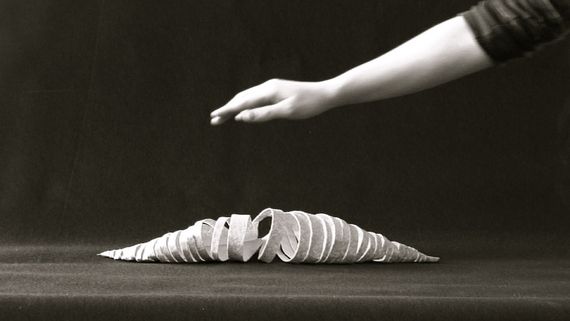
What if new materials were valued for their performativity, not just their performance? Material innovation tends to focus on improving performance; tweaking material properties like insulation, wear-resistance, and flexibility to increase comfort, safety, environmental or health benefits. Materials are – like the invention of the dishwasher – meant to enhance performance in known situations, not change the situations themselves. Imagine materials developing capacities to interact with their surroundings and stimulate change, beyond efficiency and incremental improvements.
… it is a question not of imposing preconceived forms on inert matter but of intervening in the fields of force and currents of material wherein forms are generated. Practitioners… are wanderers, wayfarers, whose skill lies in their ability to find the grain of the world’s becoming and to follow its course while bending it to their evolving purpose.
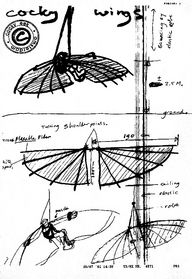 Early design drawing for the TGarden wings, on fax paper, 2000.
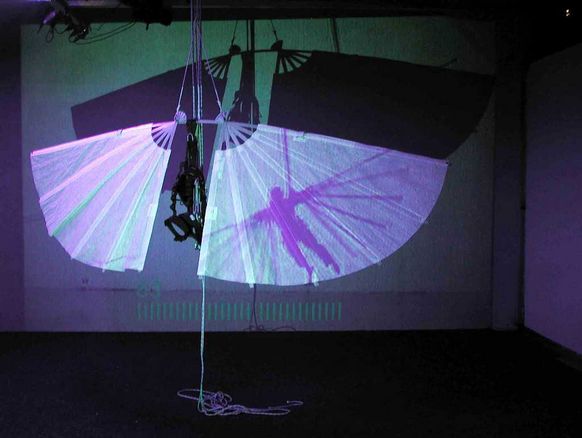 Wings with integrated accelerometers, designed for visitors of the mixed reality playspace TGarden. Accelerometers measured the changing speed and tilt of the wings in motion. Sensor data produced by their movement was used to generate an immersive audiovisual environment, projected back through and around the wings. V2, Rotterdam, 2001.
Sensing Costumes
In the late 1990s and early 2000s, when miniaturisation of electronic components made soft electronics more widely available, ‘smart’ fabrics In contrast to traditional, passive materials (like cotton or viscose) whose properties always remain more-or-less the same, ‘active’ materials are capable of reacting to surrounding conditions. A change in UV light, pressure or temperature, for example, can affect the material’s shape, colour or density. When soft electronics – including conductive yarns, sensors and actuators – are integrated in active materials, they become capable of more nuanced responses to external stimuli. seemed to be harbingers of a future where human-computer interaction wouldn’t rely on desktop or hand-held devices. Wearable computing suggested that digital information would become accessible through a wider range of gestures, movements and somatic signals.
Early applications of these materials ranged from military to medical, and began making inroads to fashion. The promise of smart textiles was that interfaces would become wearable; woven into materials that we put on and live in, making the very fabric of reality feel more pliable. From the vantage of the 2020s, these promises look utopian. Wearables became smartphones, restricting the range of gestures we use to interact with digital information. Motion sensing and computer vision facilitated the proliferation of ubiquitous surveillance technologies, narrowing the extent of acceptable human behaviour. Instead of durable clothing made of responsive, self-repairing fabrics, fast-fashion lowered the cost and increased the speed of production for high volume, low longevity clothing, generating vast amounts of textile waste and pollution.
Around the same time, FoAM was involved with developing responsive environments – immersive mixed reality installations – exploring a new form of participatory, live performance featuring full-body interaction with digital media. Electronic textiles and wearable computing could sense a wider range of gestures – conscious and unconscious – moving away from the limited ‘point-and-click’ interface.
What about all the components that need to be integrated?
 TGarden belt with integrated accelerometers, wearable computer, transmitter and batteries. An iPAQ PDA (later replaced with a CerfBoard) connected to motion sensors via cables threaded through the fabric. Brussels, Belgium 2000–2001.
Without access to an industrial material science lab, we turned to low-tech bricolages of computers, sensors, flexible wires and sculptural materials. The materials had to be flexible enough to be worn, and sufficiently sturdy to protect the electronic apparatus they carried. They encouraged their wearers to move, by extending, restricting, or camouflaging their habitual movements or gestures. These constraints led to peculiar costumes that transformed participants into otherworldly characters. The costumes taught the body how to move; the weight, size, and structure of the materials producing garments that behaved like sculptural exoskeletons. Some made the body feel large yet light, others were constricting, or amplifying the wearer’s smaller movements.
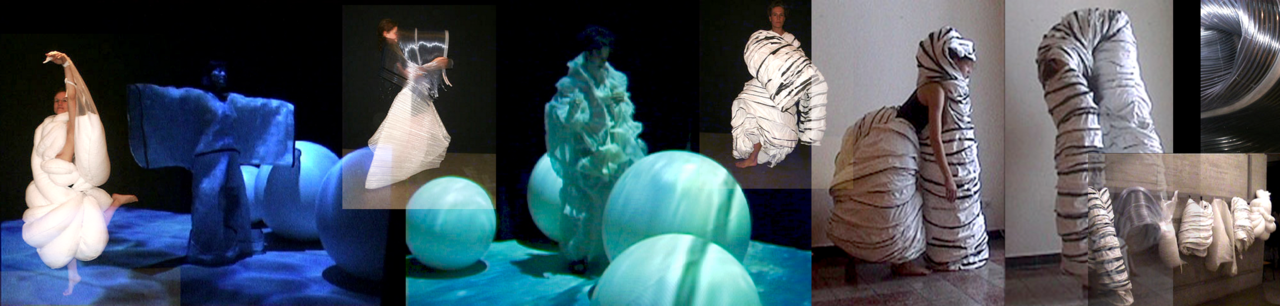 TGarden costumes with embedded accelerometers. The fabrics and costumes encouraged the visitors to use their bodies as both calligraphic and choreographic instruments. Guided into a dark room, a vision system tracked their movement through the space. Individual and collective movement data – sensed through costume and room – was translated in real time as surround sound and immersive projection. The choice of costume produced tangibly different corporeal experiences and media environments, enabling certain movements while restricting others. SIGGRAPH, New Orleans, USA, 2000, Mediaterra Athens, 2000 & Ars Electronica, Linz, Austria, 2001
Imagine clothing acting as an extension of your skin. A context-aware, semi-porous membrane, an interface between corporeal and environmental processes, capable of adapting, healing, and ageing.
We envisioned clothing capable of extending, supporting, modifying or protecting postures and gestures, by changing its structural and visual properties. Clothing that interacts with its wearer’s movement like a prosthetic part of the body. Whose shape and texture are not predefined but made from self-repairing and programmable textiles, materials that evolve based on previous exposures. It can morph its surface to become tougher or softer, thicker or thinner, more or less permeable, continuously adapting to changing conditions, like a living entity. Fluctuating between verve and lethargy, life and death. Weather, temperature, germ count and other elements act as variables in its algorithmic design. Emancipated from inert, predesigned, prefab objects – to become more responsive, perhaps even animate.
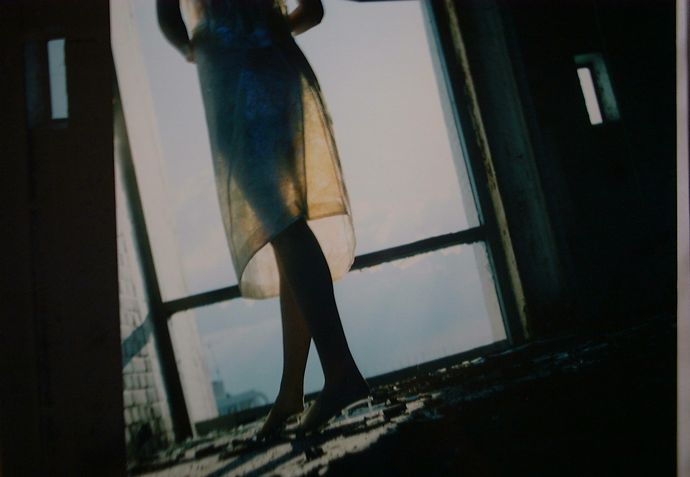 Skirt inspired by marine translucence and bioluminescence, from Peggy Jacobs’ graduation collection at the HKU in Utrecht, the Netherlands, 1996. Too fragile to wear in TGarden, this became one of starting points for the costume design.
What the costumes taught, from participants' accounts:
—My costume was heavy so it limited the range of movement. It was frustrating, and yet it made it easier for me to learn the relationship between my movement and what's happening in the space.
—The stripy costume lends itself naturally to flailing my arms around. It felt big, expansive, like it extended my movement into space. I initially tried the tubing one, but that didn't feel like an appropriate morning suit The stripy one made me feel lighter.
—I think mine was like what people in the future would wear, especially men. It also looks like a snake that's going to asphyxiate you, so that had a nice wildlife side to it.
—When I started manipulating the fabric of the suit, I suddenly got a broad range of audiovisual responses. I wasn't moving my body so much, but I moved the fabric instead.
—I was very aware that the costumes are instruments. I used mine as a rattle.
Excerpts from video documentation, including TGarden 2001 and TGarden Feedback
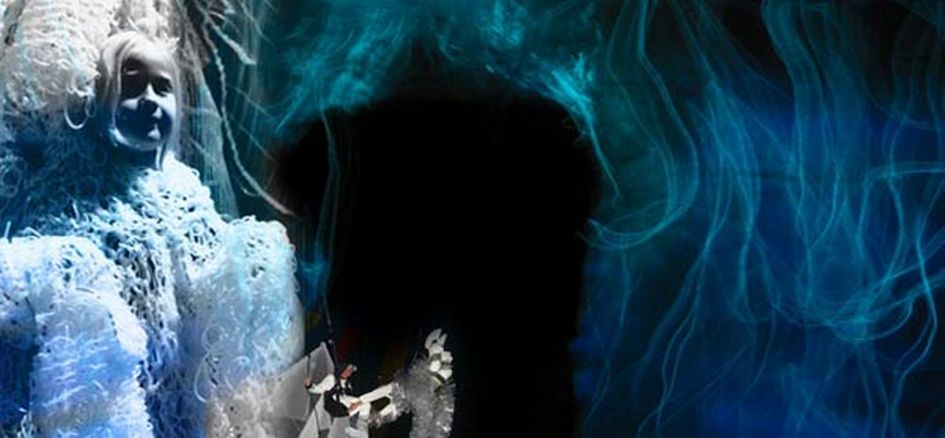 Wearable wall in the txOom responsive environment. Electroluminescent wires crocheted into a room-sized, flexible curtain, with integrated accelerometers and stretch sensors. As a threshold between changing rooms and the playspace, this flexible wall had openings for arms, legs and heads. Visitors could ‘wear’ and manipulate parts of the wall, like slipping on an oversized jumper. Stretching, moving, and deforming the material affected the sound and light that emanated from the wall. The Hippodrome, Great Yarmouth, UK, 2002.
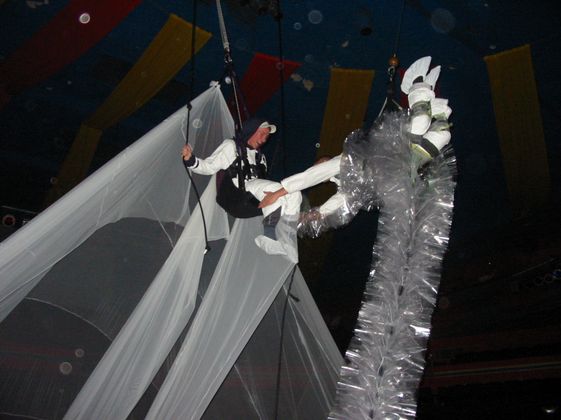
txOom wearable projection surfaces. The wearers shape the screens by swinging and (bungee) jumping. Stretch sensors and accelerometers measured the fabric’s tilt, acceleration, and deformation, ‘recycling’ human movement to reshape the architectural and audiovisual environment – an irreal ecology populated by sonic and luminescent ‘entities’. The Hippodrome, Great Yarmouth, UK, 2002
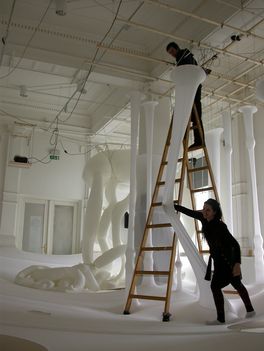
Testing stretch sensors in the flexible ‘trees’ of the trg responsive environment – a room-sized organism of white fabric. By stretching the space’s surfaces, the visitors could enter into dialogue with its sonic and visual atmospheres. KIBLA, Maribor, Slovenia, 2005
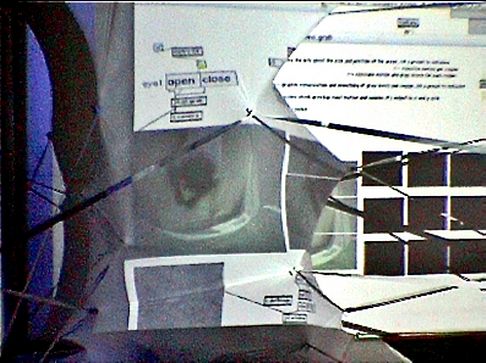 Testing a wearable, stretchable screen prototype. Mixed Reality Media Worlds workshop, FoAM, Brussels, Belgium, 2004.
We were submerged in a dense, gel-like substance, that absorbed our actions and amplified them through these evolving creatures. They were cloth-bound, luminous, oscillating entities, with an ability to extend into the ethereal worlds visible through an osmotic membrane.From the txOom story
Animate(d) light
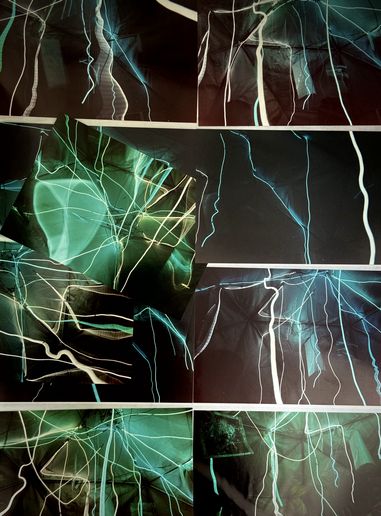
Electroluminescent (EL) ‘roots’ woven through the ceiling of the groWorld Bunker. Pressure sensors under the installation’s soft floor translated the visitors’ presence into shimmering lighting patterns. Sitting, lounging, rolling and walking across the floor, alone or with others, switched or dimmed hundreds of EL filaments, producing an ever-changing, dynamic illumination across a domed ceiling. Burning Man, Black Rock City, Nevada, USA, 2000
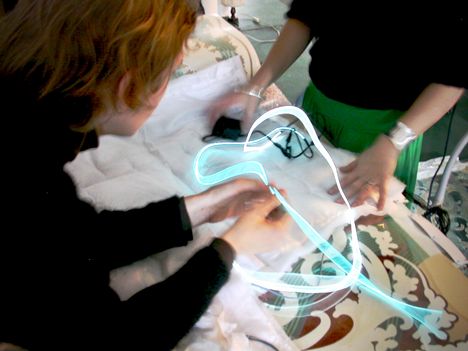 Explaining the workings of electroluminescent wires. Softwear: Active Materials workshop, FoAM, Brussels, Belgium, 2005.
… let us provisionally define animation as broadly as possible, as the projection of qualities perceived as human – life, power, agency, will, personality, and so on – outside of the self, and into the sensory environment, through acts of creation, perception, and interaction."
Teri J. Silvio
Keen to work outdoors and in spaces with natural light, we experimented with flexible materials that glow from within. Most immersive experiences at the time were made and experienced in dark rooms with bulky screens and projectors; we played with light as we would with paint or a musical instrument. Through a series of Exercises in Colloquial Luminescence, we explored how materials converse with light. Ambient changes of illumination extended gestures and responded to weather patterns.
...make something which experiences, reacts to its environment, changes, is non-stable... make something indeterminate, which always looks different, the shape of which cannot be predicted precisely... make something which cannot 'perform' without the assistance of its environment... make something which reacts to light and temperature changes, is subject to air currents and whose function depends on the forces of gravity... make something which the 'viewer' handles, with which he plays and thus animates... make something which lives in time and makes the 'viewer' experience time... articulate something naturalHans Haacke
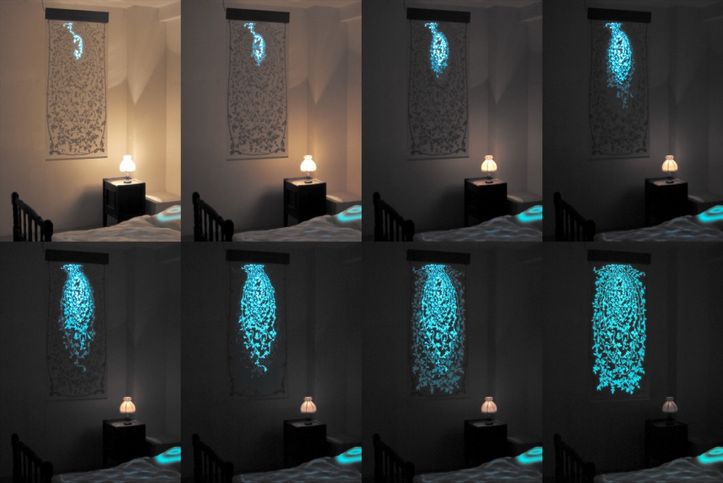
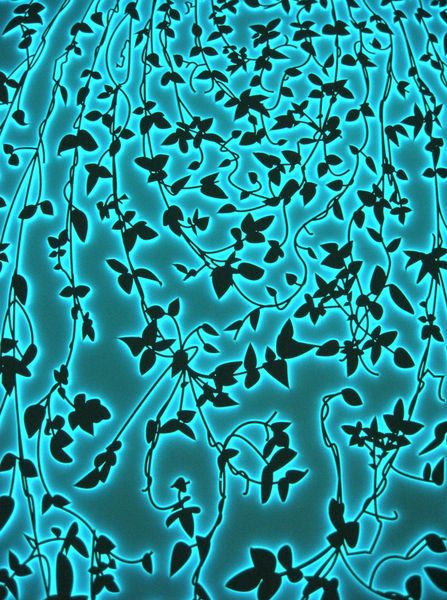
A reactive window blind, Digital Dawn by Rachel Wingfield, emulating photosynthesis: electroluminescent ink printed on silk in a foliage pattern, with solar cells and integrated light sensors mounted on the reverse. The blind absorbs sunshine through the day; as ambient light fades, the foliage ‘grows’ across the surface in shape and intensity – releasing the day’s stored light, enveloping the room in organic patterns and a soft green glow. At Illumine residencies, FoAM, Brussels, Belgium, 2003.
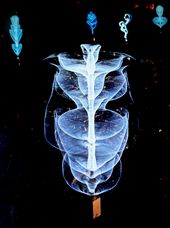 Activated tree in the groWorld Forest. At night, the forest became haunted by its own spectral glow. Modelled after extinct plants, the groWorld forest was a collection of two-dimensional drawings forged in metal and electroluminescent wire. A simple motion sensor in each ‘root’ activated a rotating electric motor; as the trees spun, they appeared to gain a third dimension. Starlab, Brussels, Belgium, 2000.
What happens to the body, what becomes of fashion when the wearable screen is a ubiquitous technology?Carole Collet, .x-med-a.
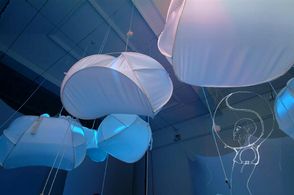 Wearable projection screens in the trg waiting room. Visitors were fitted with large, lightweight ‘helmets’ before entering the responsive space. Once inside, these wearable screens ‘captured’ parts of the visual environment, simultaneously immersing, destabilising and reverberating movement and social interaction. KIBLA, Maribor, Slovenia, 2005
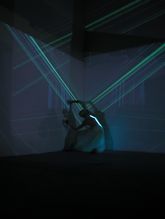
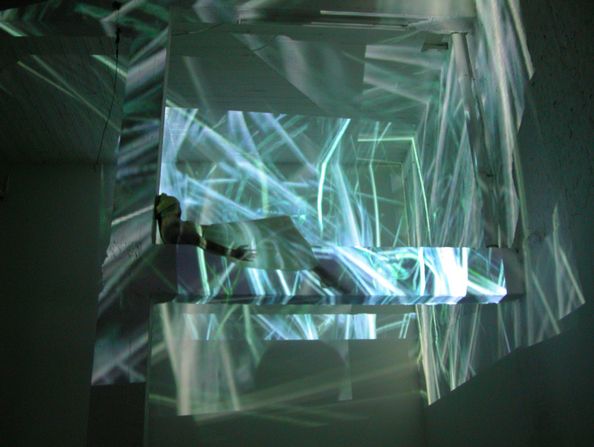
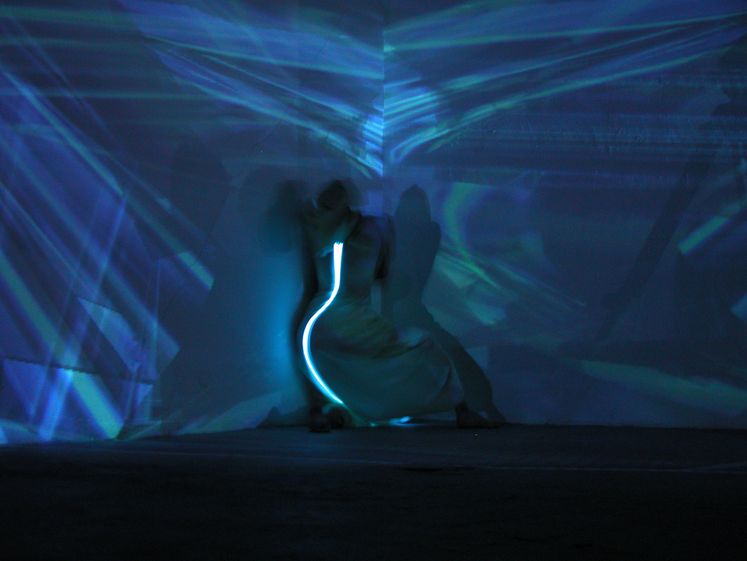 Electroluminescent, inflatable dress and projections responding to the movements of Camila Valenzuela-Moguillansky in Ebb and Flow of Stubborn Matter. Illumine residencies, FoAM, Brussels, 2003
What do these materials feel like?
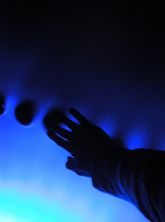 Testing a single line of taxels. Like a pin-cushion, pressing one or more taxels on one surface pushes out those on the other.
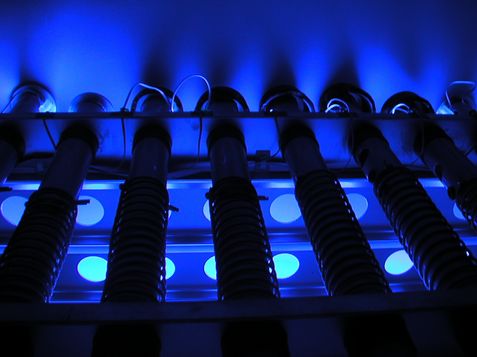 Behind the curtain: pneumatic ‘air muscles’ (actuators) attached to pressure sensors, in a computer-controlled grid of taxels (tactile pixels) – Lyt_A’s underlying mechanism.
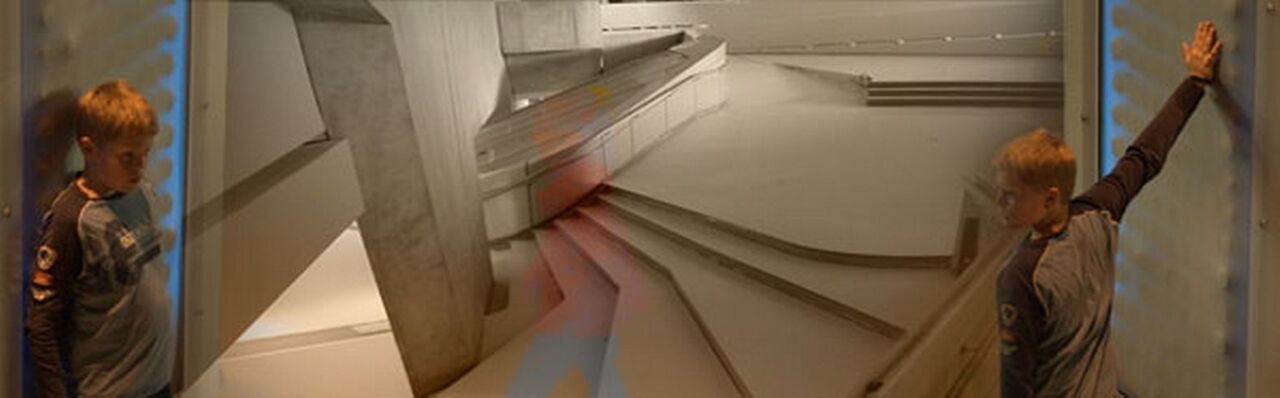 Lyt_A – installation, instrument, and translation medium. A mechatronic, semi-flexible structure in two mirrored halves, placed far apart: touch one surface and the touch arrives, visible and feelable, on the other. Phaeno Science Centre, Wolfsburg, Germany, 2005
Threads and circuits
At connection points between hard electronics and flexible textiles, cables twist and tangle, connectors break, fabric rips. Wanting to integrate electronic components in wearable and architectural materials, we shrank the scale of our public experiments, animating materials closer to the body, whether human or robotic.
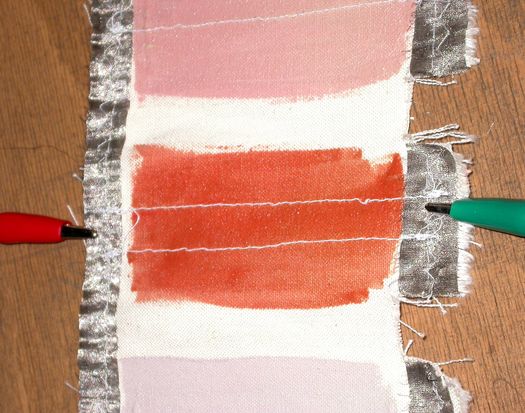
We began experimenting with soft electronics – textile substrates with integrated sensing capabilities (biometric, environmental), wireless communication, power transmission, computing, and actuation. These components were networked together within a fabric, as a textile circuit board, through conductive yarns instead of wires.
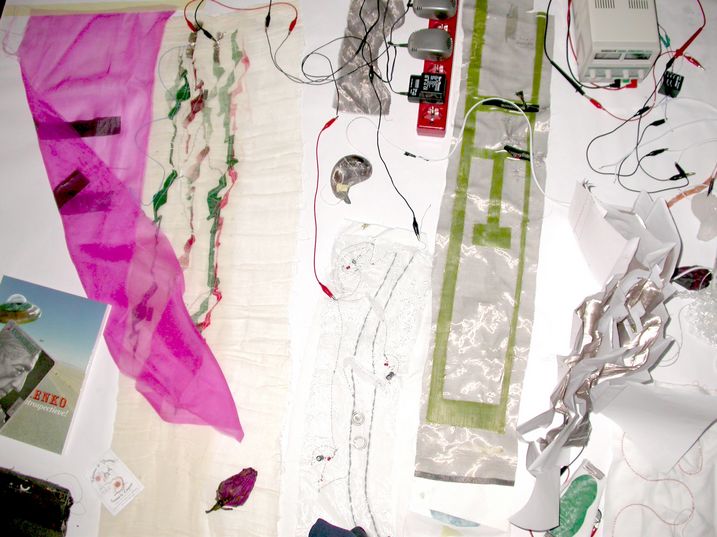
In order to work intelligently with such materials [...] we need to think deeply about our motivations and vision, instead of being seduced by animated matter (much like we are seduced by the flicker of a cathode ray tube). Why do we want the materials to change and who initiates this change? Who are the actors, what is the stage, and where does the activity happen? What does it mean? Is it a private or public performance? How do active materials impact the environment (they are often composites that require portable sources of power and present challenges for recycling and reuse)? What are the political, social, and legal issues such as surveillance and privacy, the shifting definitions of private and public, and the constantly evolving technological infrastructures that modulate our social relationships?Joanna Berzowska, at the Softwear: Active Materials workshop, FoAM, Brussels, Belgium, 2005.
These questions travelled with us. E-textiles and smart materials have rich creative potential, but are often developed in contexts misaligned with our own intentions. A self-healing bulletproof vest increases a soldier’s likelihood of survival without giving them any greater say over the war they’re sent to fight. The same responsiveness we value in a material – sensing, adapting, self-repairing – could just as easily be turned to keeping someone in the field.
In contrast to self-repairing materials, our focus gradually shifted to explore cultures of repair.
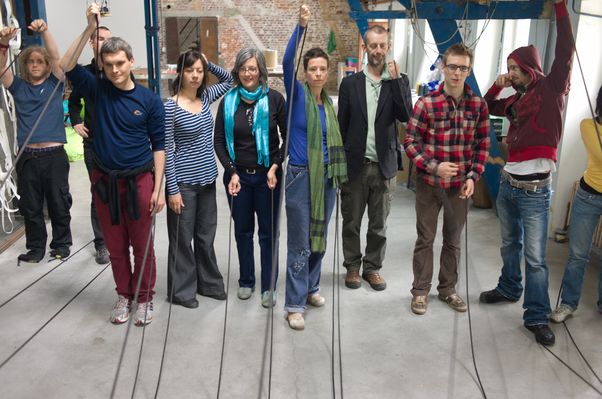
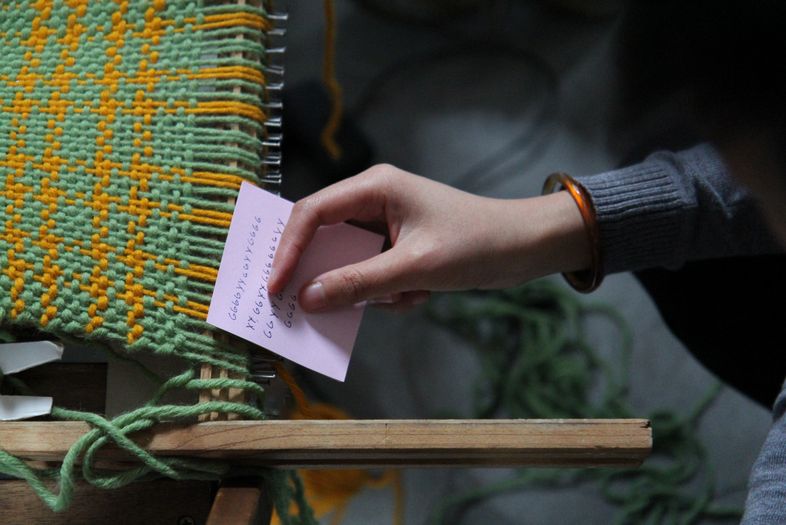
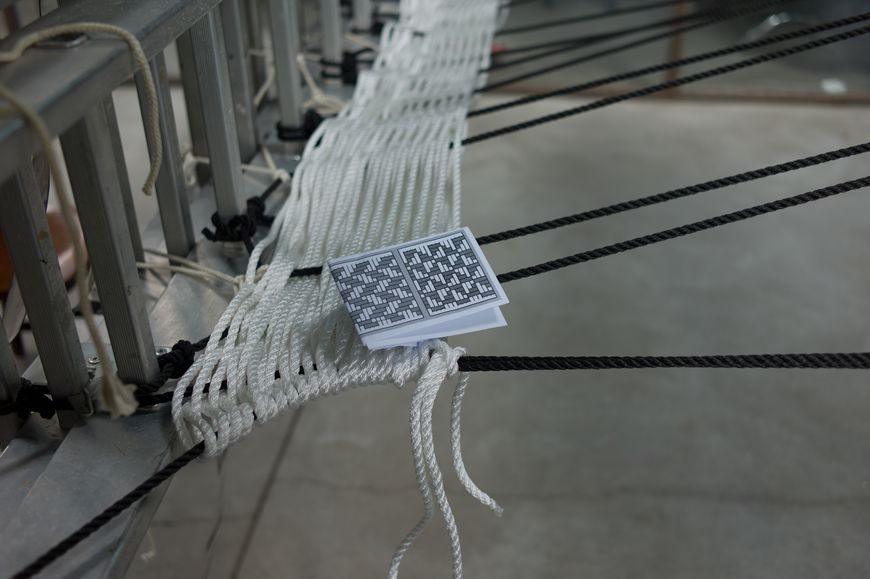 Room-size cloth woven by a collaborative weaving algorithm. Mathematickal Arts workshop, FoAM, Brussels, Belgium, 2011.
Textiles are understood to have social, political and aesthetic dimensions and a dress is described as constituting the space between the self and the non-self. Fabrics begin to perform in ways which are associated only with electronic media systems, or even weather monitoring devices, and coding, a practice normally done alone, separate from the moment of execution, is done live, at run-time.
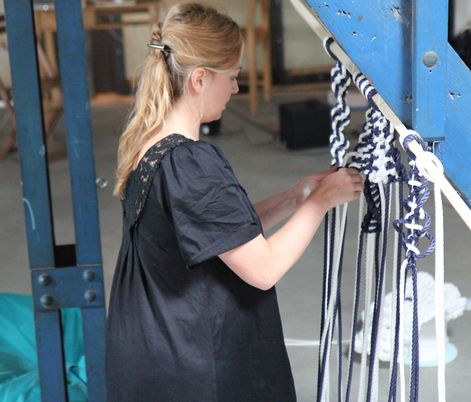
Are textiles a craft, a design discipline, a cultural practice, a means by which to record history? Or is a textile an analogue form of data visualisation, an intelligent interface, an interactive surface, a smart skin?Carole Collet
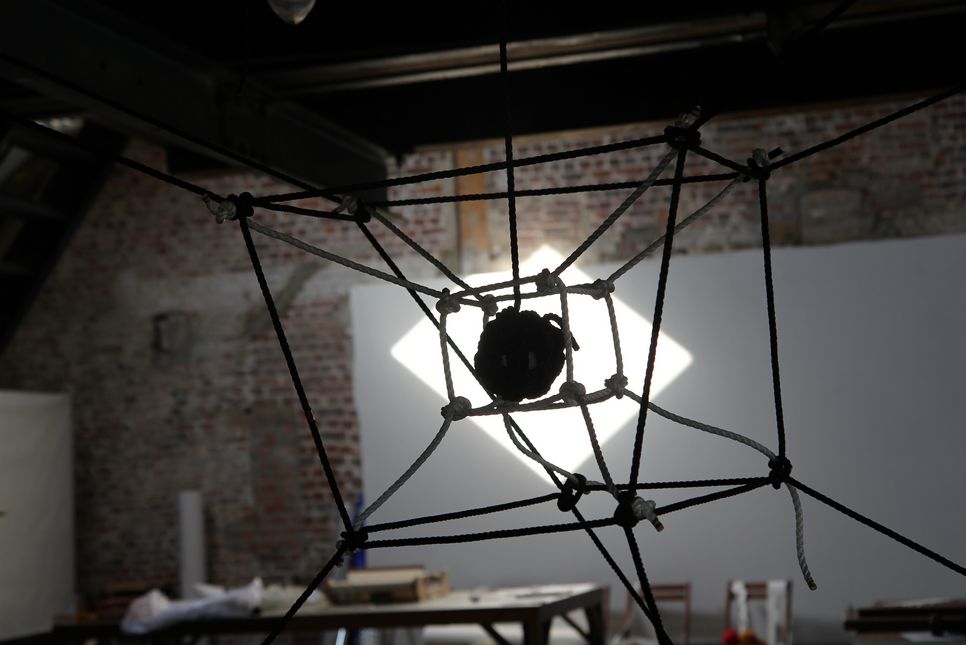
Is weaving – perhaps the first digital artform humans engaged in – actually itself a computational process?
The connections between textiles and computing run older and deeper than the familiar story of Jacquard and Babbage allows. Long before the loom was automated, weaving was already computational – discrete crossings, binary sheds, pattern as a kind of logic.The Jacquard Mistake, Pattern Thinking Across Domains
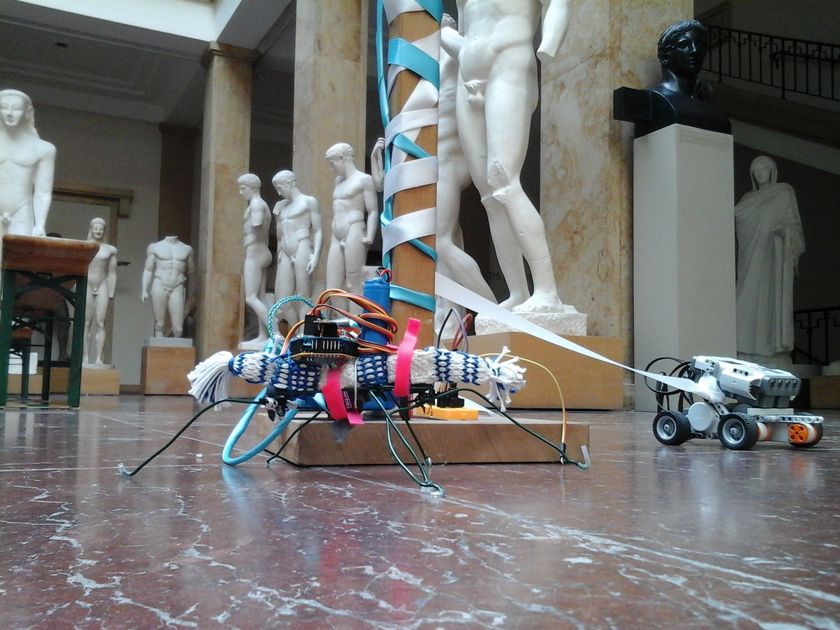 Penelopean robots at the Homo Textor conference, Munich, Germany, 2019
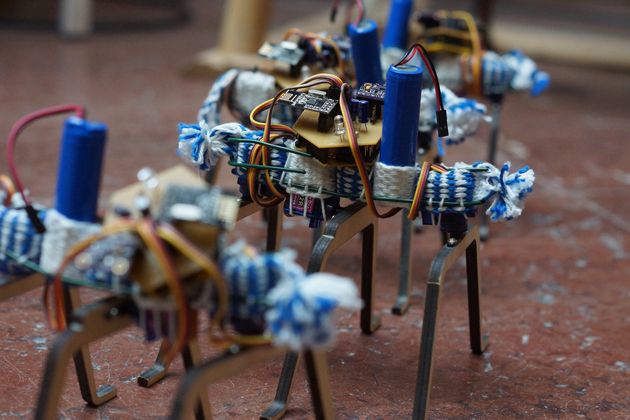
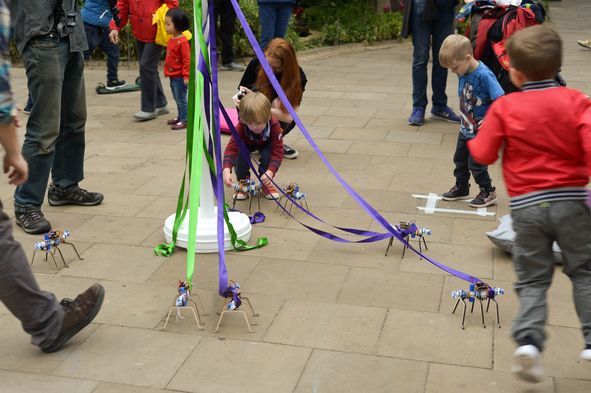
How can we make tools that help understand the ancient weaver's mind? How they calculated and solved the first recorded mathematical proofs, embedding them in pattern. How do certain forms of technology define our relationship with the world? For the Greeks of antiquity, weaving was the fundamental link to the cosmos. Today we use computational structures to reason about ourselves and our society, our CPUs replicating the pattern manipulating circuits that link them with the textile technology they were originally built from.From project Penelope
What future for textiles?
Tangles, spores, offshoots
Some dug deeper into the origins of textiles and computing; some continued developing inflatables; some broadened research into the emerging fields of biotechnology, biomimicry, and biofabrication; others ventured further into phenomenology and metaphysics, probing the ungraspable membranes between human perception and animate matter.
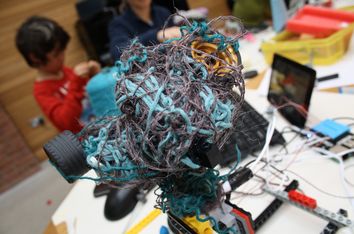
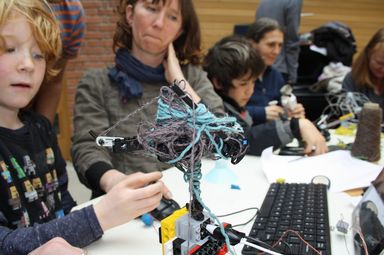 Tanglebots – prototype weaving robots that fail at weaving, so start with tangles instead. Components harvested from e-waste toys (motors, gears, electronics), visual programming in Scratch. A messy entry point into weaving, robotics, and coding. The tangle comes first. Penryn, UK, 2017
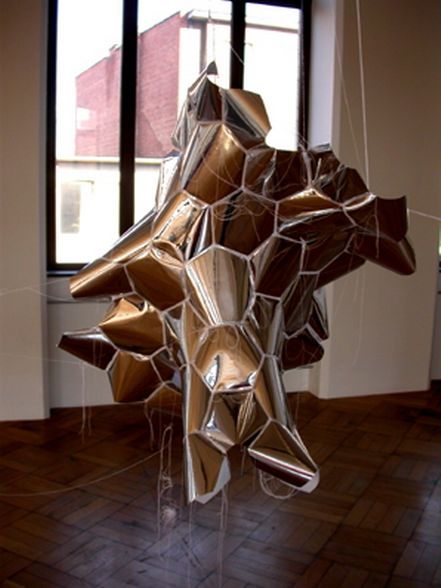
Geometry in fabric: a faceted, metallic construction, one of several approaches to hyperbolic form explored at the Hyperbolic exhibition. Working with mathematician Daina Tamiņa, whose crochet models demonstrated that non-Euclidean geometry requires three dimensions to exist, FoAM investigated how materials could embody forms beyond flatland. STUK, Leuven, Belgium, 2006
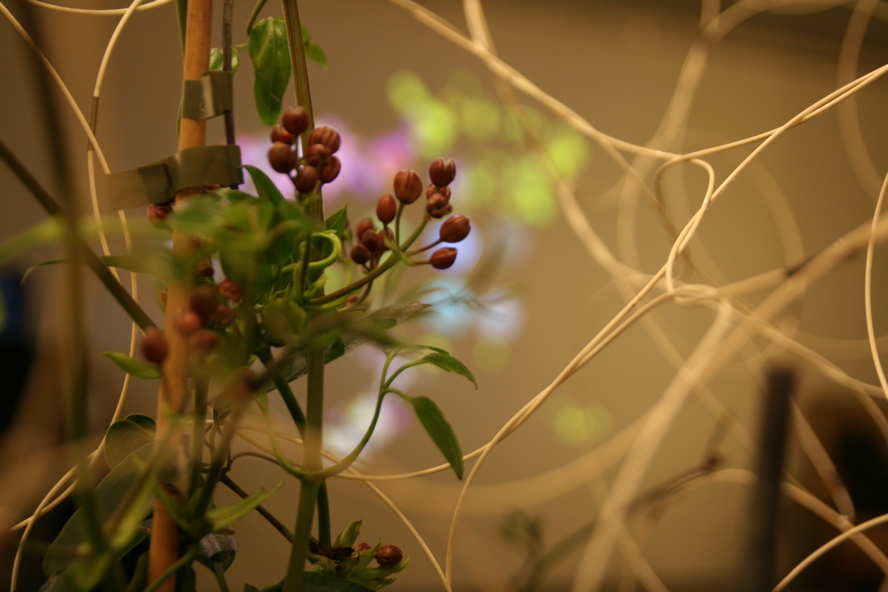
A rigid 3D lace as lightweight architecture for freestanding vertical gardens – a meshwork that supports living growth. MetaboliCity by loop.ph, at Borrowed Scenery V0.1, Ghent, Belgium, 2009
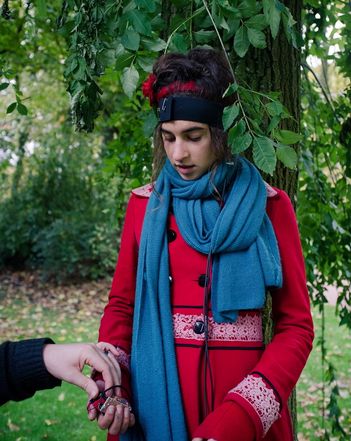
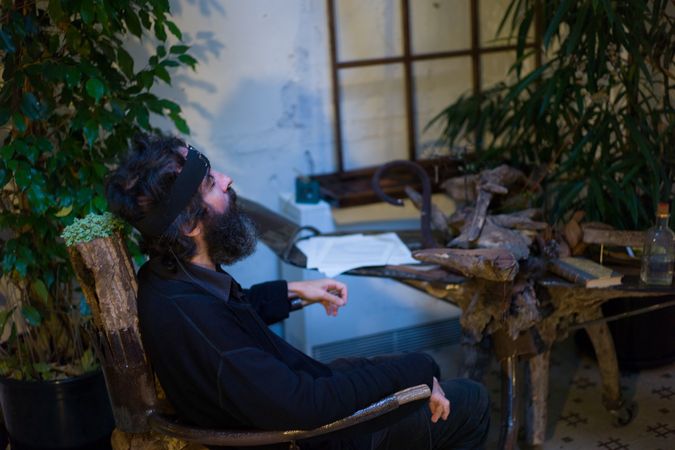 Silent Dialogues, Plant Consciousness Interface. A dual coil amplifier, earthboot, and headband connect the wearer to ferns or trees: not reading the plant, but receiving its electrochemical signals. Borrowed Scenery Alternate Reality Tutorials, Vooruit, Ghent, Belgium, 2012
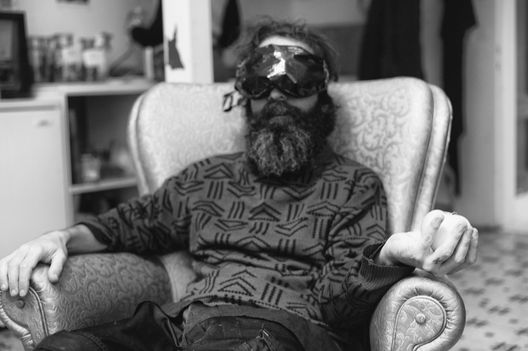 Mycelial photon exchange instrument (MPEIR): goggles seeded with bioluminescent mycelium (Panellus stipticus), taped shut. In darkness, the wearer sees by fungal light. Borrowed Scenery Patabotanists’ Lab, Vooruit, Ghent, Belgium, 2012

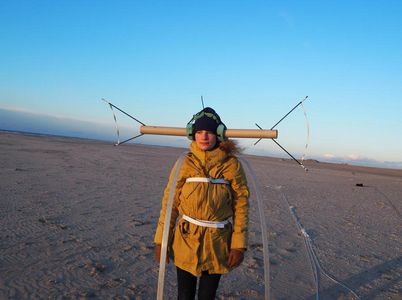
Landing Sites, a sensorial experience in which the wearer’s inner landscape converges with the surrounding landscape. With wind-goggles on, the horizon turns with the wind. Zandmotor and Terschelling, The Netherlands, 2017.
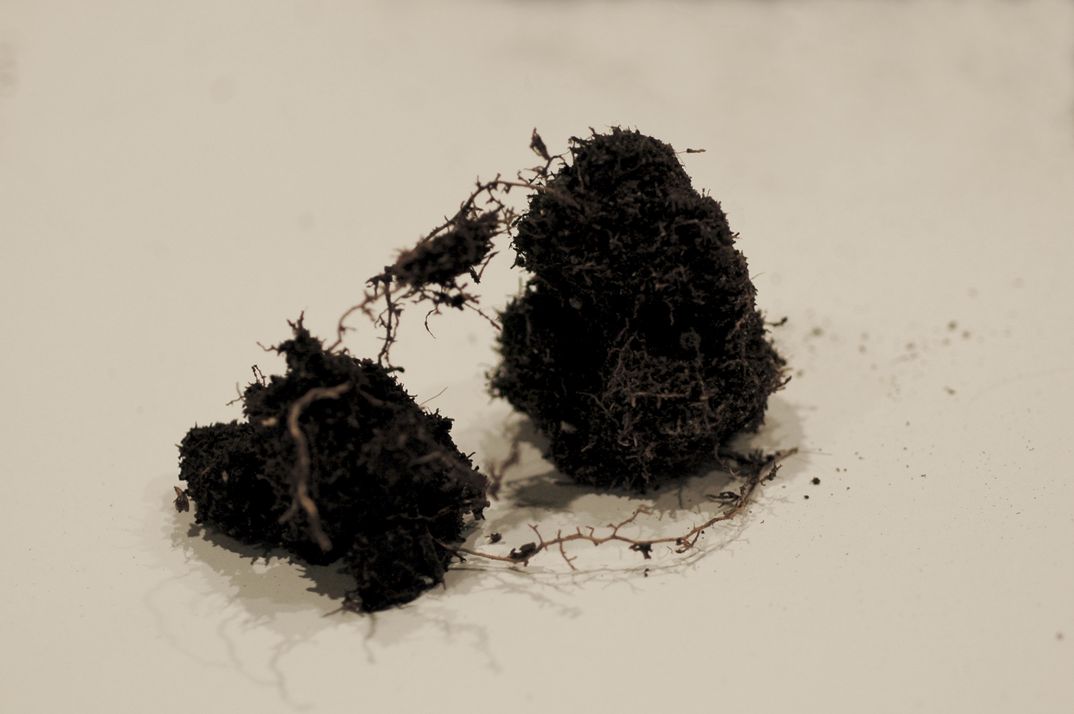 groworld: Plant-grown meshwork. Patch of dirt, somewhere, 2005. Designing (for and with) Living Systems
🜛
This photo essay is compiled from materials by FoAM members and allies – artists, designers and technologists in our extended network, including: Joanna Berzowska, Cynthia Bohner Vloet, Joris Bois, Carole Collet, Edith Doove, Cocky Eek, Karmen Franinović, Nik Gaffney, Matthias Gmachl, Dave Griffiths, Martin Howse, Peggy Jacobs, Theun Karelse, Lina Kusaite, Maja Kuzmanović, Sia Kyriakakos, Alex McLean, Goran Pejkoski, Steven Pickles, Ana Rewakowicz, Isabel Rocamora, Chris Salter, Xin Wei Sha, Daina Tamiņa, Todor Todoroff, David Tonnessen, Camila Valenzuela-Moguillansky, Yon Vissel, and Rachel Wingfield. With gratitude for the curiosity, creativity and resilience of everyone involved.
🜛