Designing (for and with) Living Systems
Looking back, looking forward: A photo essay mapping a research practice at the intersection of design and biology.
I trained as a textile designer in the late 1980s and immediately came up against the industry’s environmental costs. Since then, I have been exploring alternative ways to produce textiles without compromising on planetary health. My bio-informed design practice is an inquiry into ways of making, aligned with the flourishing of all species.
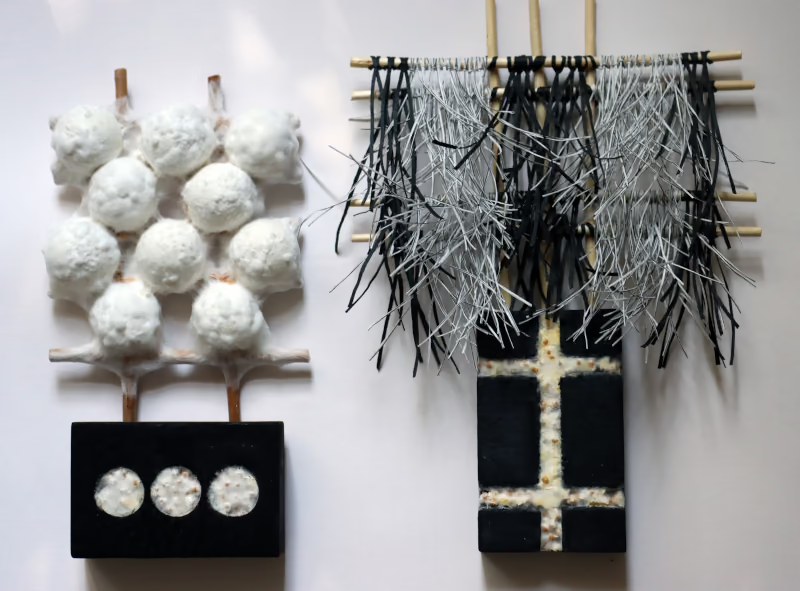
How does nature make a textile – at ambient temperature, with local nutrients, no toxic by-products? How does nature fabricate and cultivate living matter?
These are not only technical questions. Fifteen years of observation and experimentation have shifted how I work – my practice is less about imposing form on inert matter, more about learning from biological organisms and living systems whose logics are not mine: roots that respond to light, mycelium that metabolises patterns, cacti that produce slow-fur.
This photo essay traces that inquiry across 2010–25: botanical observations, speculative provocations, material experiments, and collaborative protocols – a search for alternative models of biofabrication.
Observe to understand
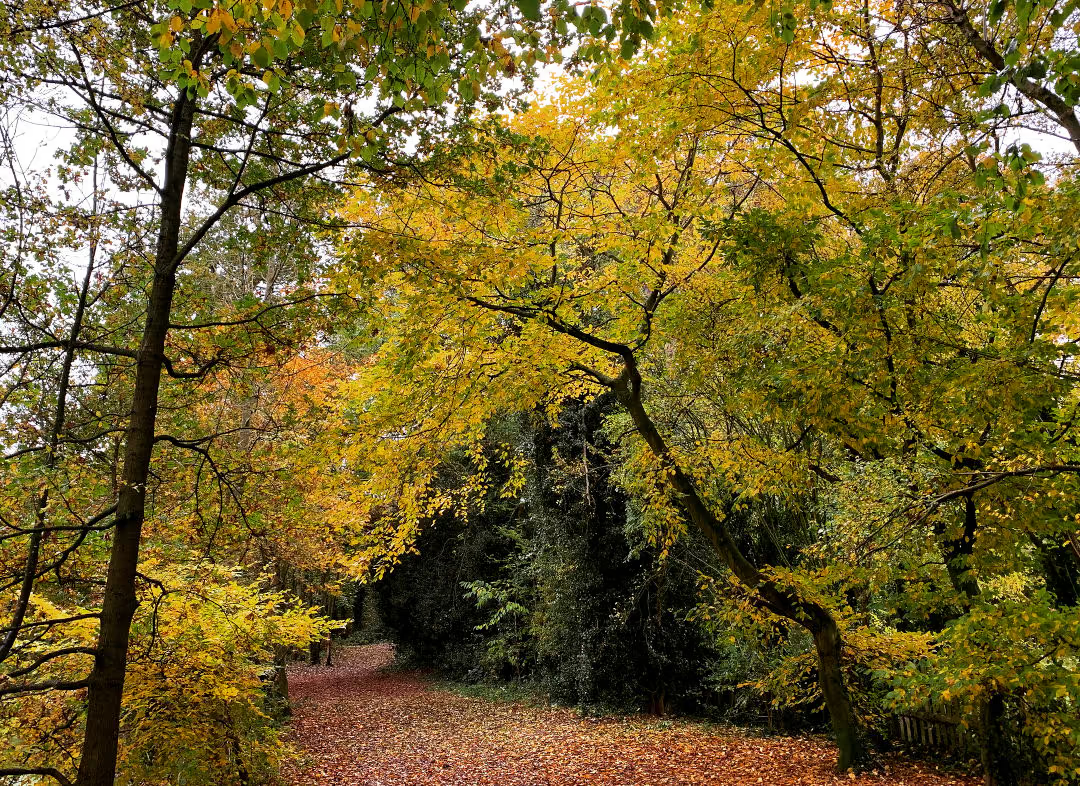
All living beings are members of ecological communities bound together in a network of interdependencies.
Fritjof Capra
We see a forest path, but invisible to our immediate senses is the multitude and constant flow of dynamic interactions between species, from the microbial realm to plants, trees, insects, mammals and birds that all together form this living ecosystem. Designing with and for living systems demands deeper understanding of ecological networks, and to what our interventions nurture or disrupt.
See also: Edible Alchemy
Learning Biological Languages
I observe and interact with natural systems in vivo and in vitro – in living systems and under lab conditions, traversing scales from the micro to the macro. Photography, microscopy, fieldwork, and horticulturing have become my tools for gathering knowledge. They keep me receptive, attending to biological processes as active meaning-makers.Structures, behaviours, living dynamics, and complex systems. Observing before intervening reframed my inquiry..
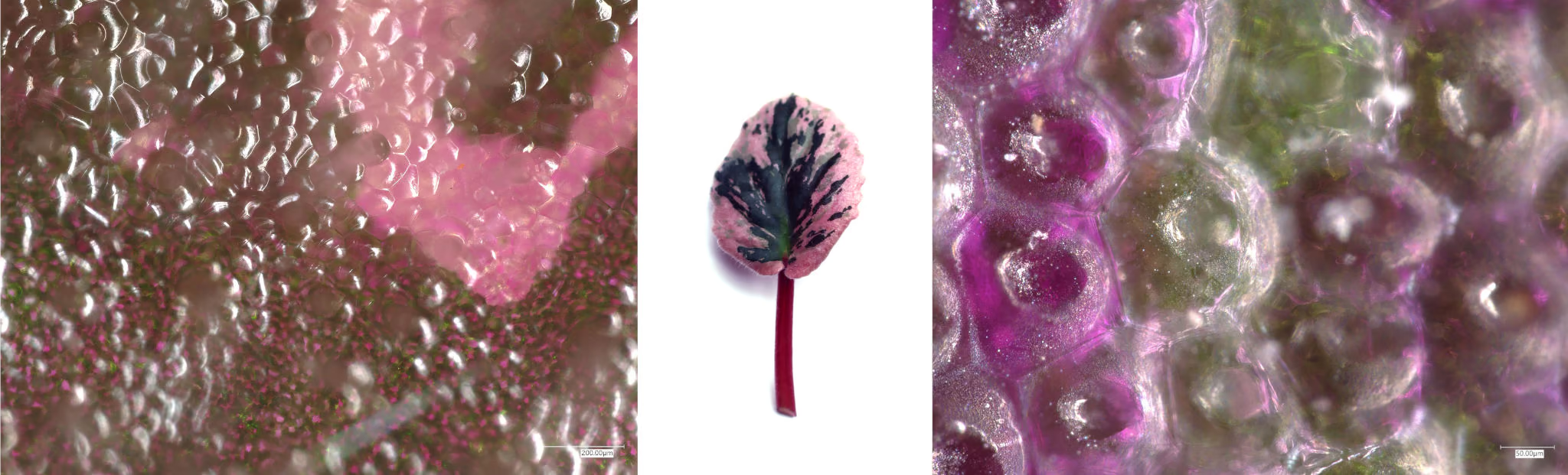 Streptocarpus ionanthus, the cellular structure and pigmentation of a Saint Paulia leaf in cross-section, Botanical Study, 2022
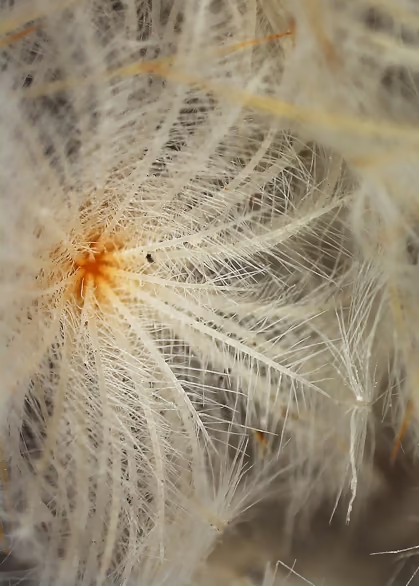 Feather cactus (Mammillaria plumosa).
Botanical Study, 2022
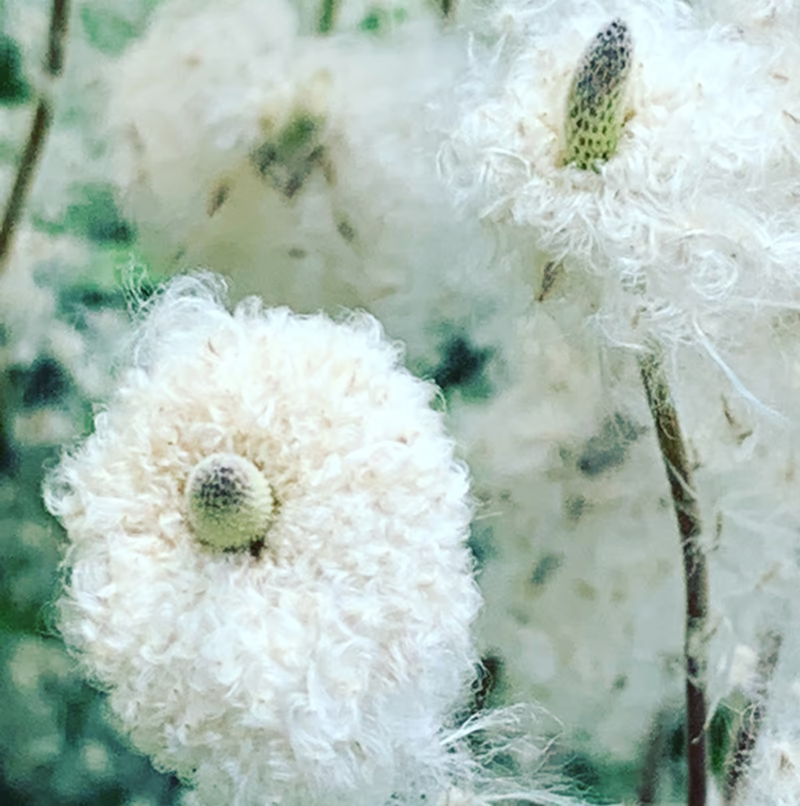 Plant-grown fur: Windflower (Anemone sylvestris)
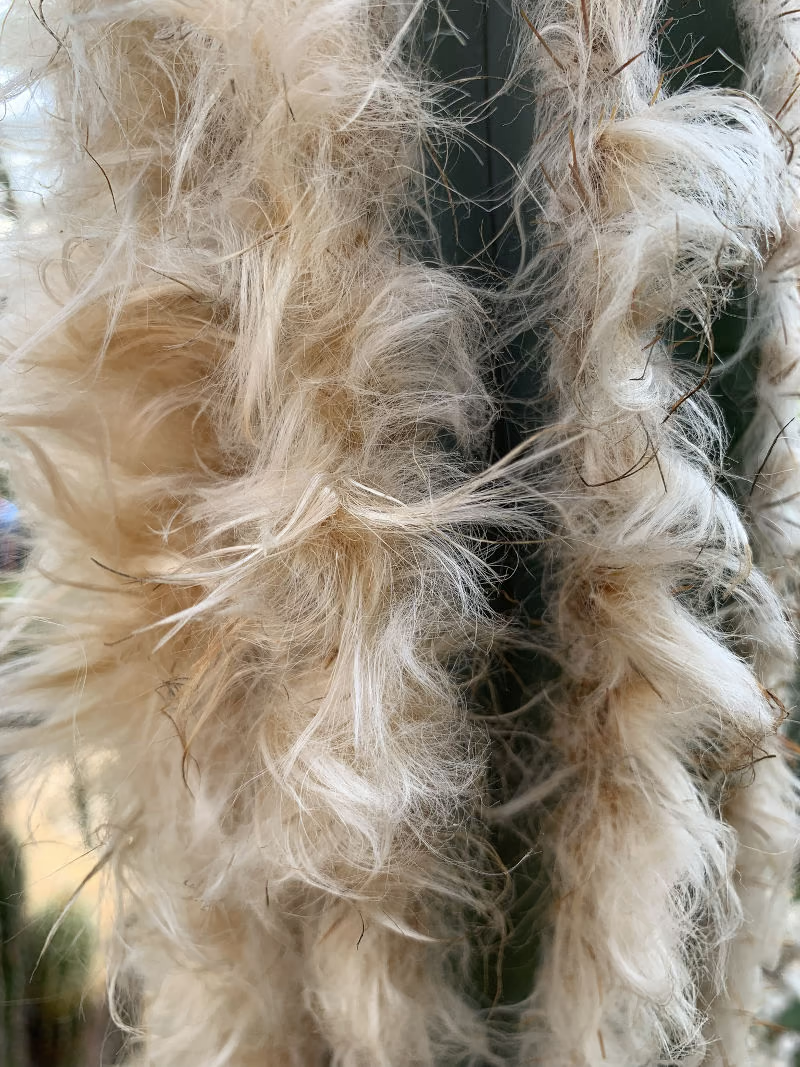 Old Man Cactus (Cephalocereus senilis)
From “what can we make biology do?” to “what is biology already doing?”
How does Nature make a textile?
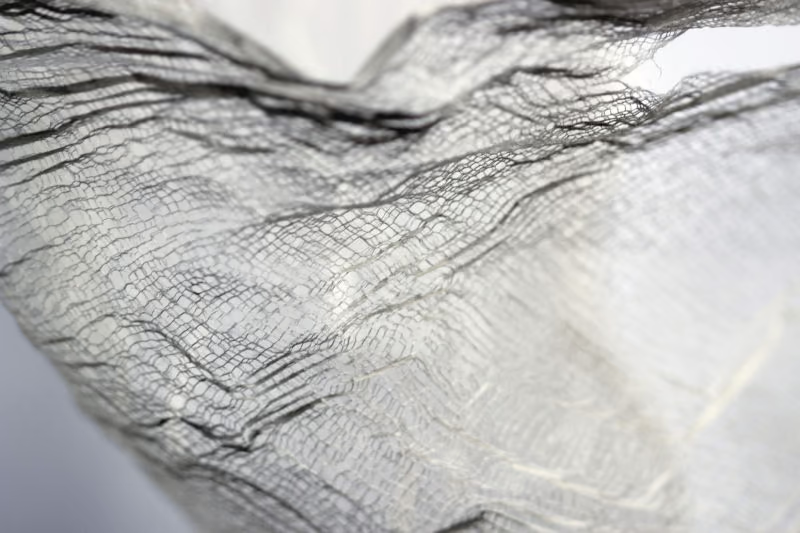
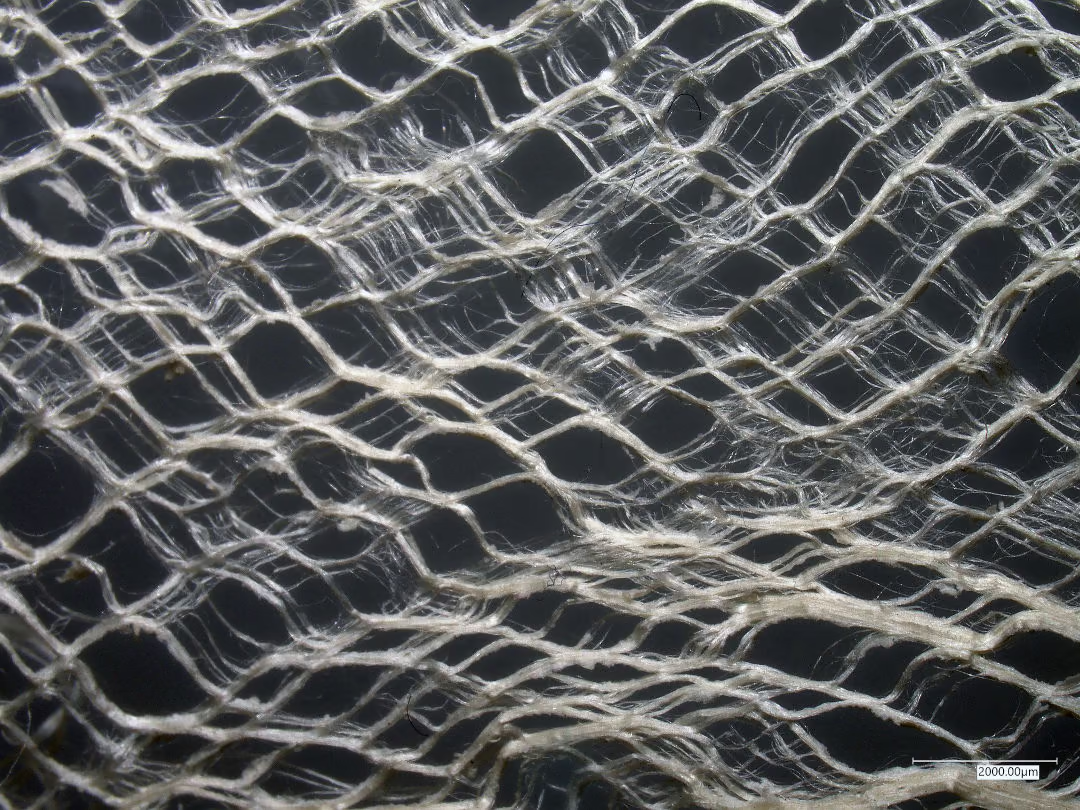 Textile-like grown structure: Lace bark, Gauze tree (Lagetta Lagetto).Botanical Study, 2022
Can living organisms interlace fibres into fabrics?
Humans have woven and knitted fabrics for millennia, using natural fibres – cotton, flax, hemp, wool and silk – hair-like filaments grown by plants or animals. Yet humans aren’t the only organisms capable of making textiles. Some plant and animal species biofabricate materials akin to a woven or 3D printed structure.
The biological complexities of living systems reveal themselves through observation. I work with and alongside these biological systems, exploring how to practice biofacture, and what our future biomateriality might look like.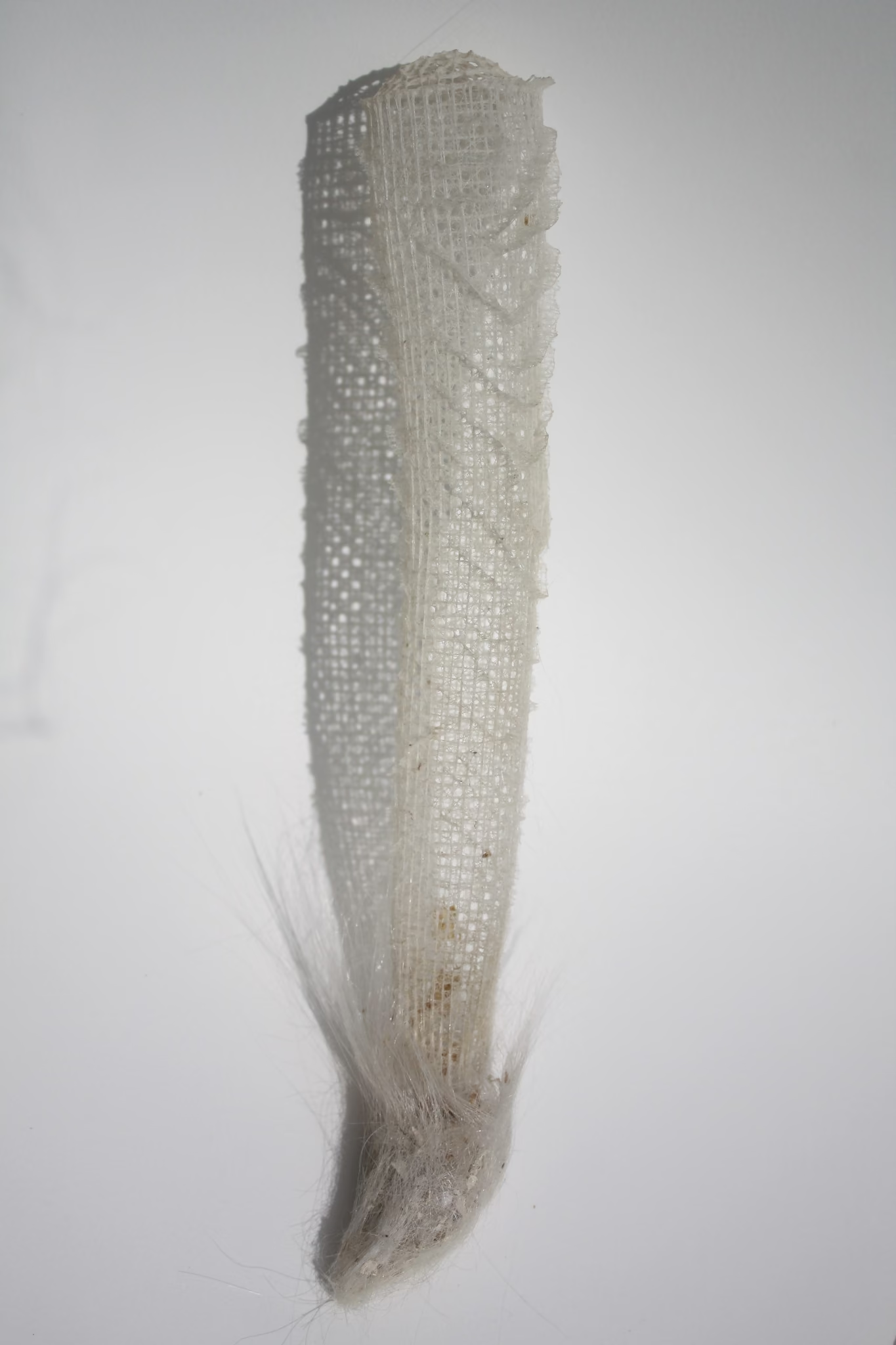
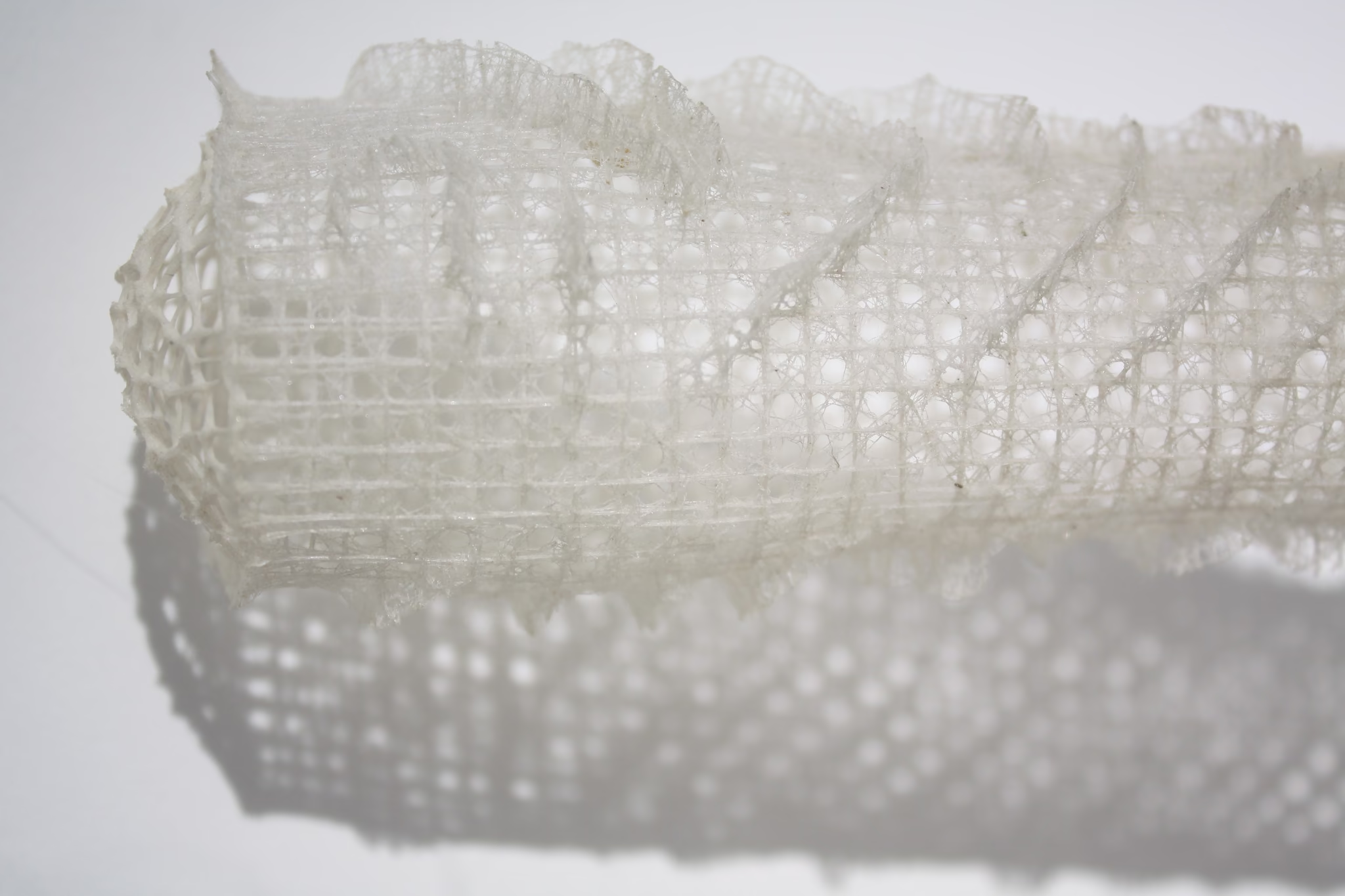 Glass sponge: Venus' flower basket (Euplectella aspergillum). Botanical study, 2022.
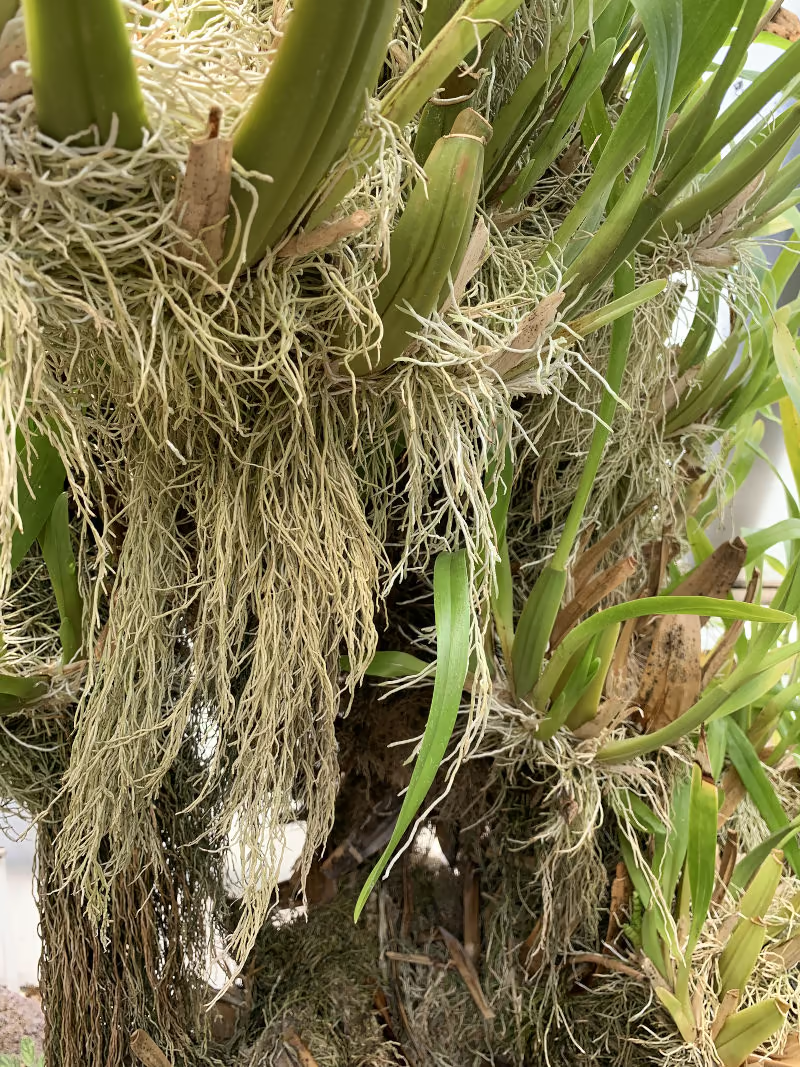
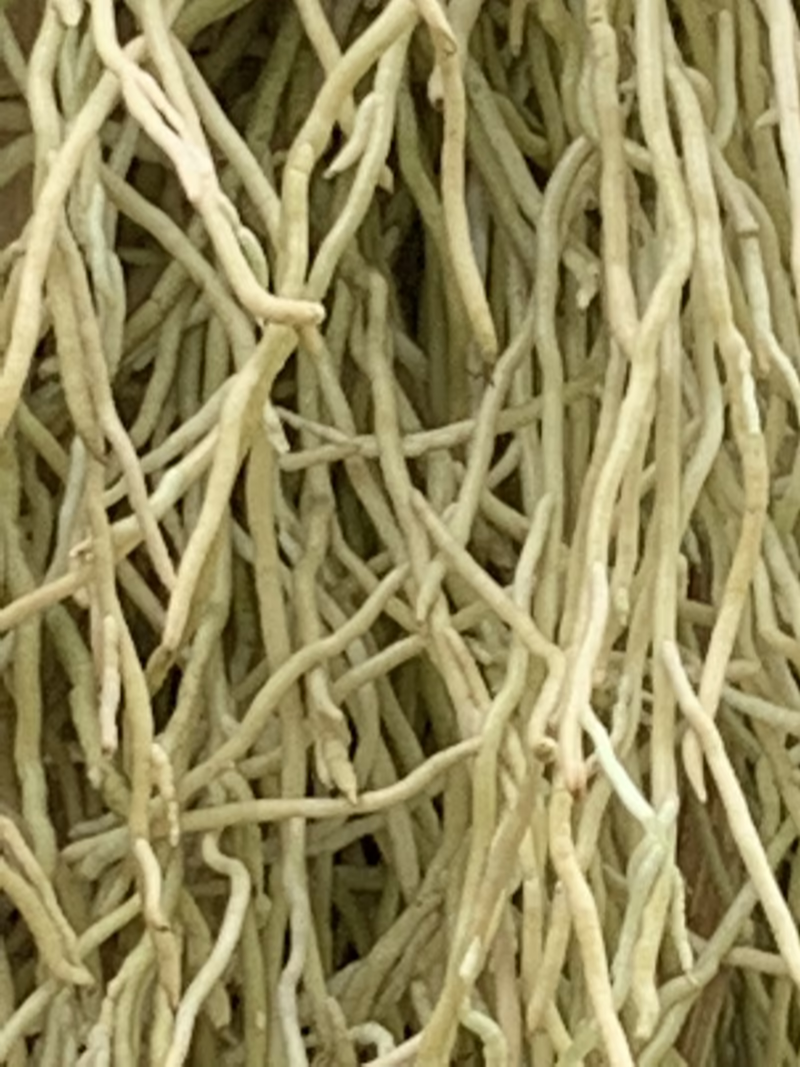 Aerial roots: Oncidium orchid on bark. Botanical Study, 2022.
Speculative biofabrication
Imagine a world where plants are genetically engineered to manufacture multiple products at once. Fruits and vegetables cultivated to feed, clothe, medicate, and adorn a growing population, efficiently and beautifully, at scale. But what kind of society wants living beings programmed as manufacturing systems?
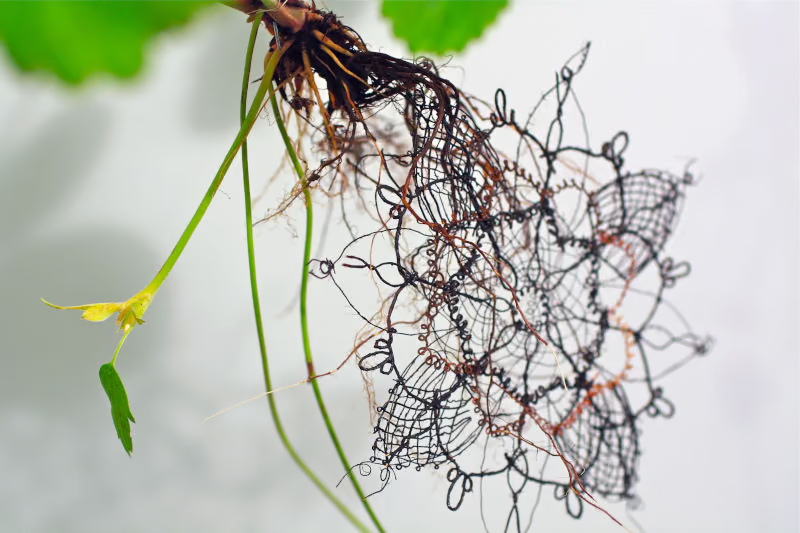
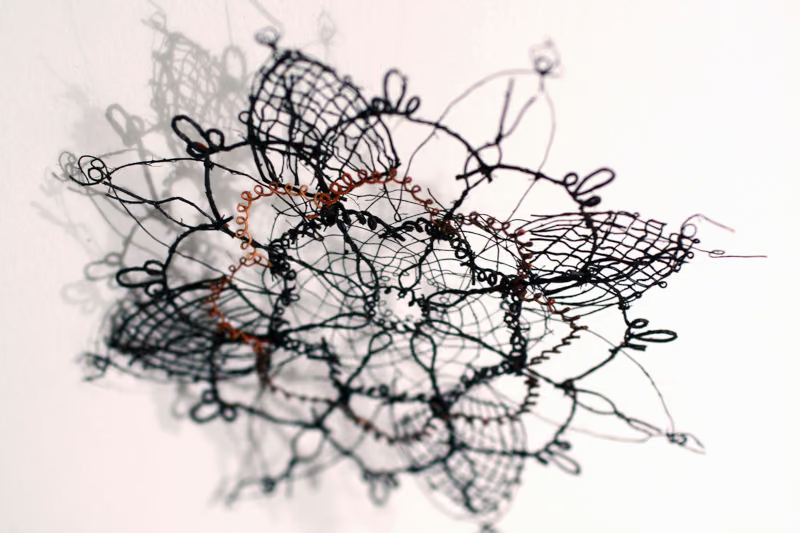 Lace Doily. Material experiment made by looping, twisting and knitting fresh strawberry roots grown in a hydroponic tank. Diameter: 12cm, Biolace, 2012.
Biolace (2010-2012)
What happens when biology is designed by humans?
Biolace is a series of material and photographic experiments – speculative design, in the sense of designing a question instead of a product. The work imagines the year 2050, when natural resources have become scarce and global population has reached beyond 9 billion: food grows in urban hydroponic greenhouses, hosting new species of plants genetically engineered to “manufacture” multiple products.
I explore plant architecture and biological morphogenesis to imagine textiles that grow themselves – programming a new responsive materiality – while questioning the validity and ethics of synthetic nature.
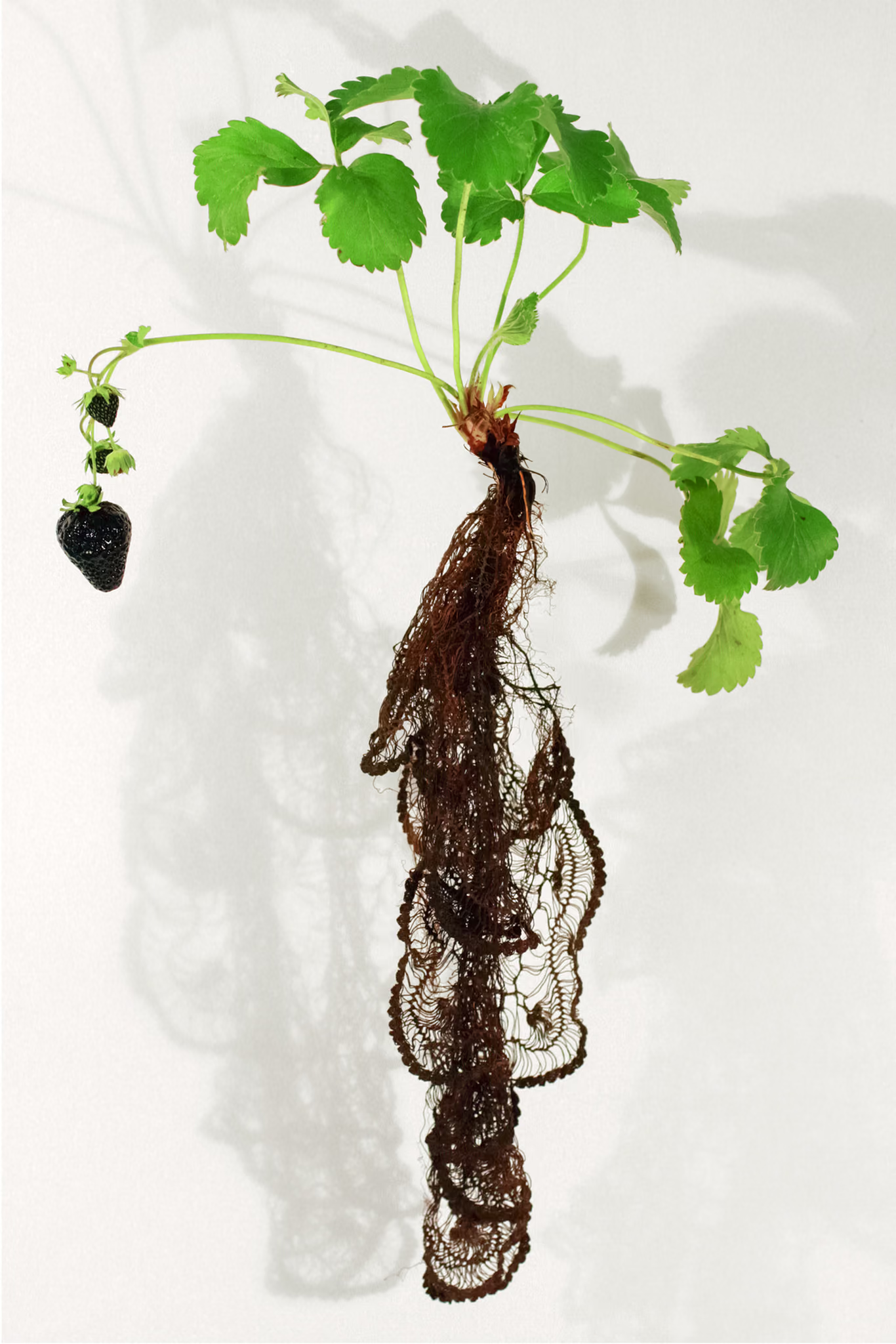 Strawberry Noir (Fragaria fusca tenebris). Black strawberry with enhanced levels of vitamin C and antioxidants, its roots growing black lace for fashion trimmings.
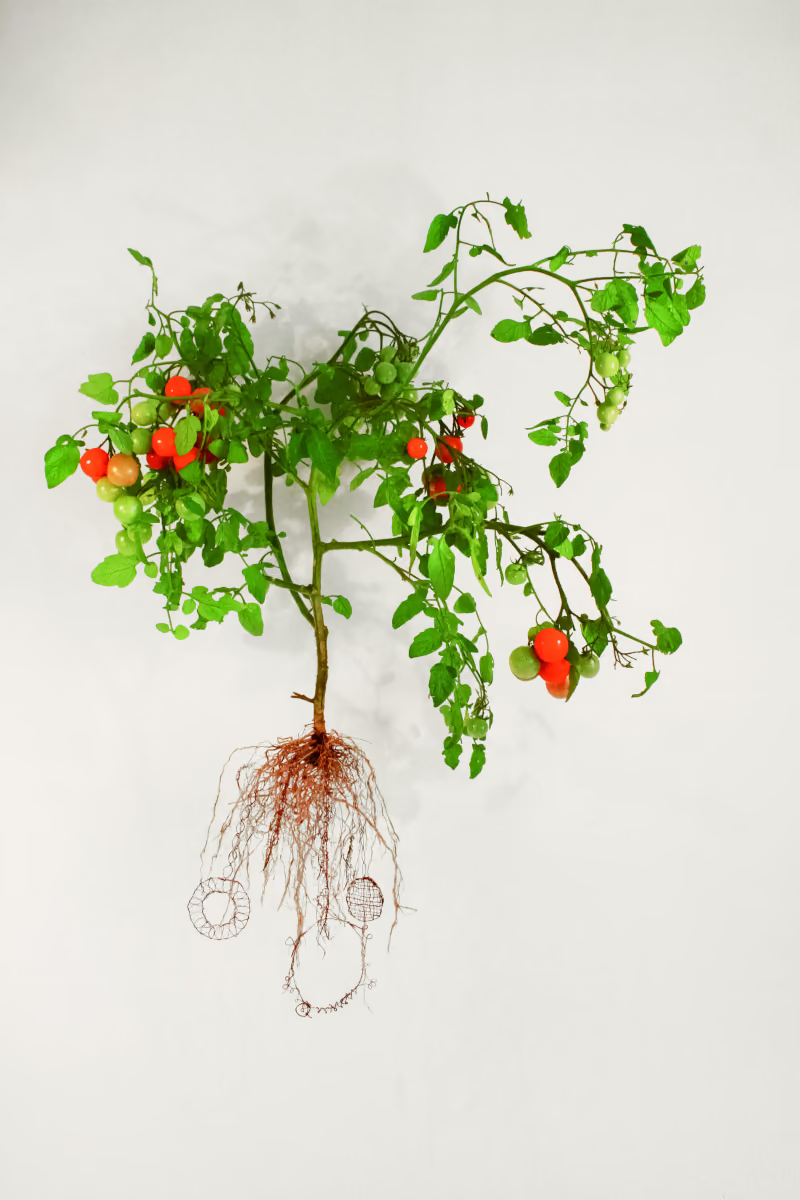 Factor 60 Tomato (Solanum lycopene fabricae), produces high levels of lycopene for UV skin protection (factor 60), and grows a protein-rich, bacon-flavoured edible tomato lace for haute cuisine.
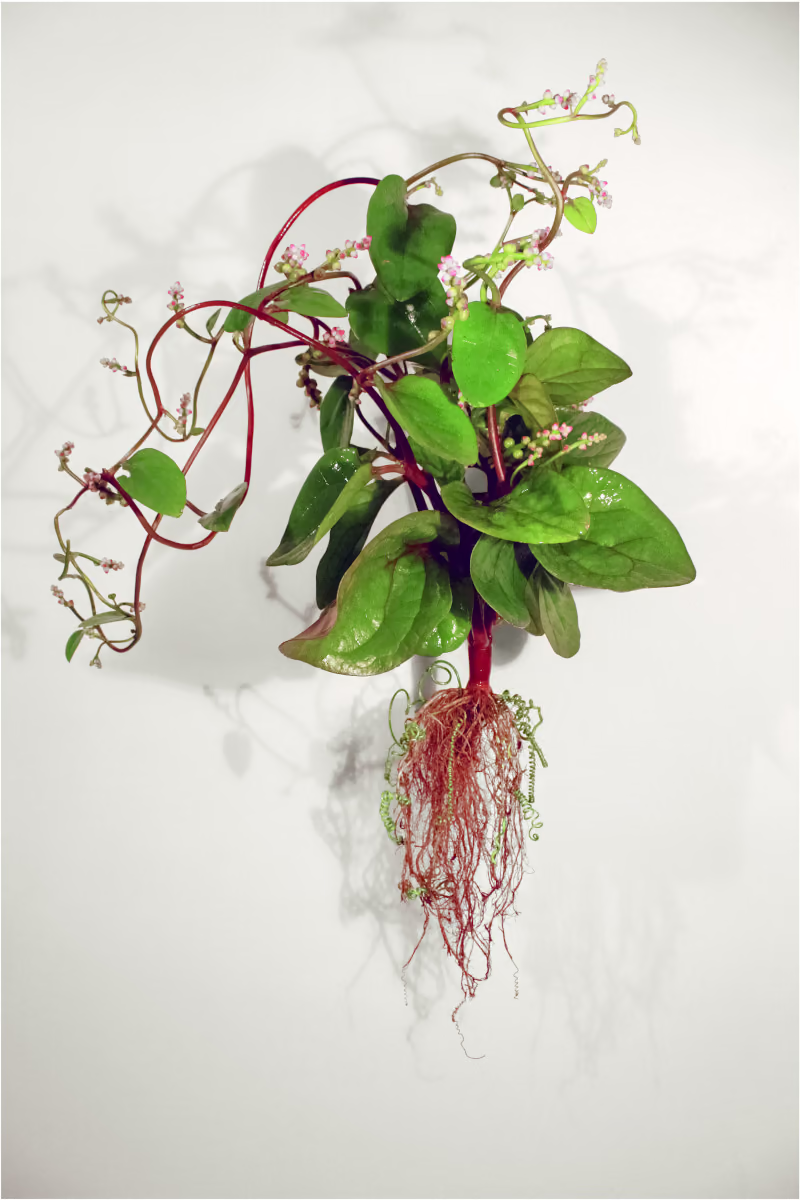 Gold Nano Spinach (Spinacia aurea electrica), produces biological nano-transistors for the electronics industry, as well as multi-mineral food supplements.
Future Hybrids (2014)
What might a hybrid taxonomy of living organisms look like?
Hyperrealistic, speculative photographs that critique a techno-genetic approach to future organisms.
Future Hybrids imagines an era where plants and fungi perform new functions: fast-growing fungi reprogrammed to produce furry caps, plant leaves engineered to grow fur, plant bulbs cultivated for bio-mining. In this imagined taxonomy, the mineral, animal, and vegetal worlds are reorganised for human ends.
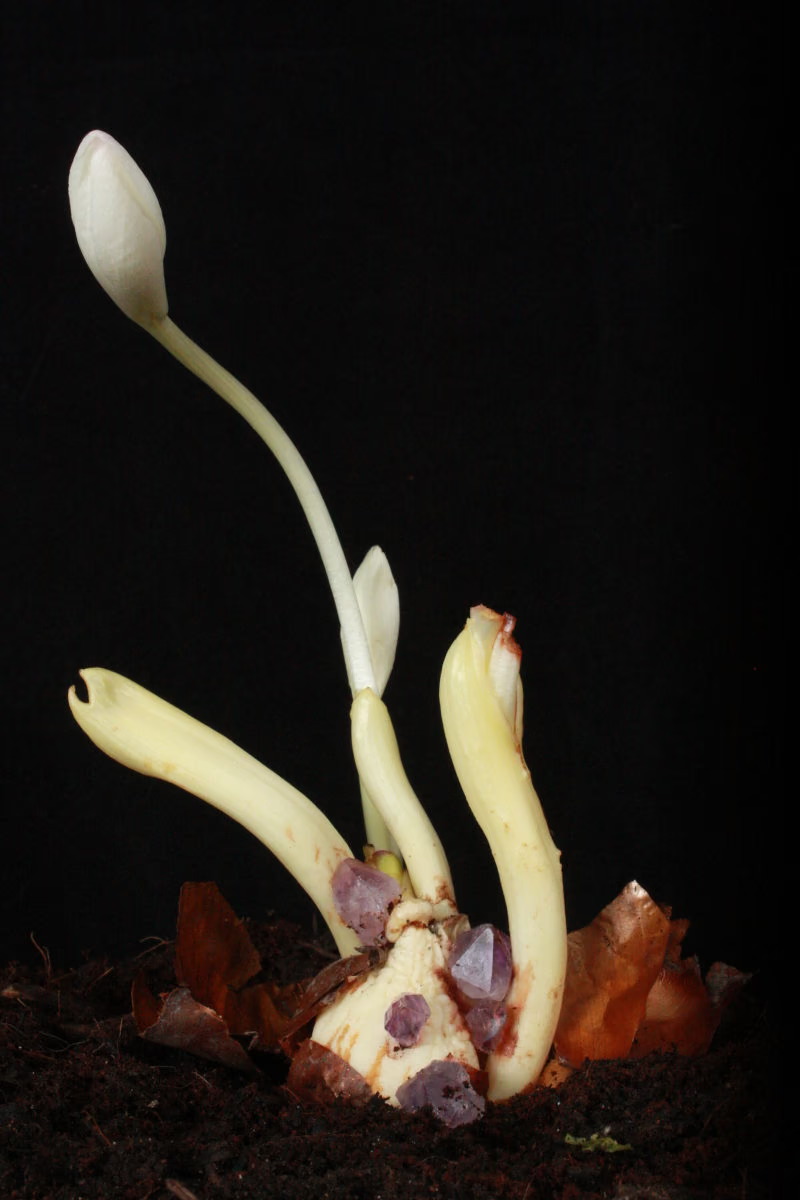 Future Hybrids. Bio Miner, 2014
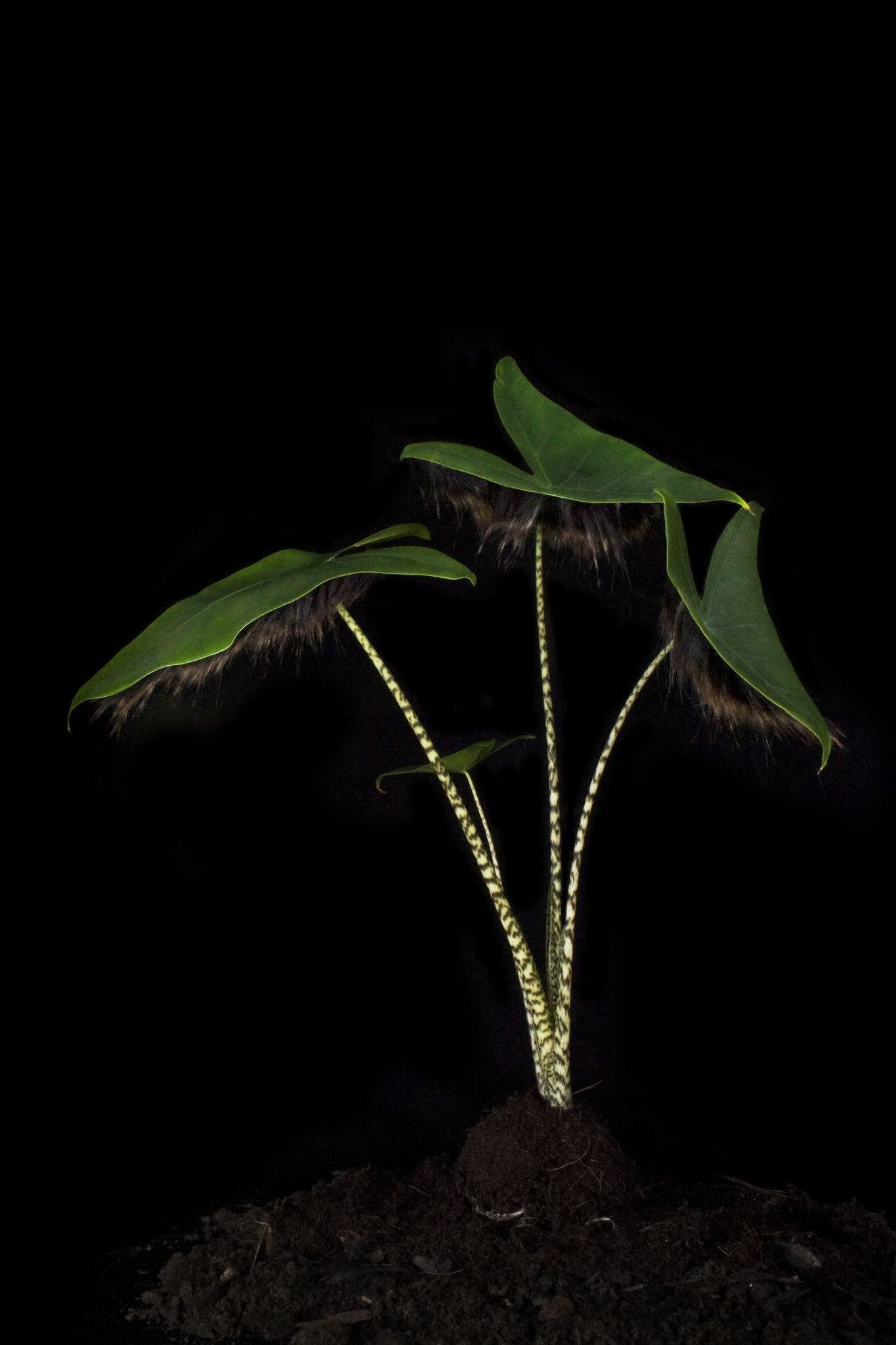 Phyto Fur.
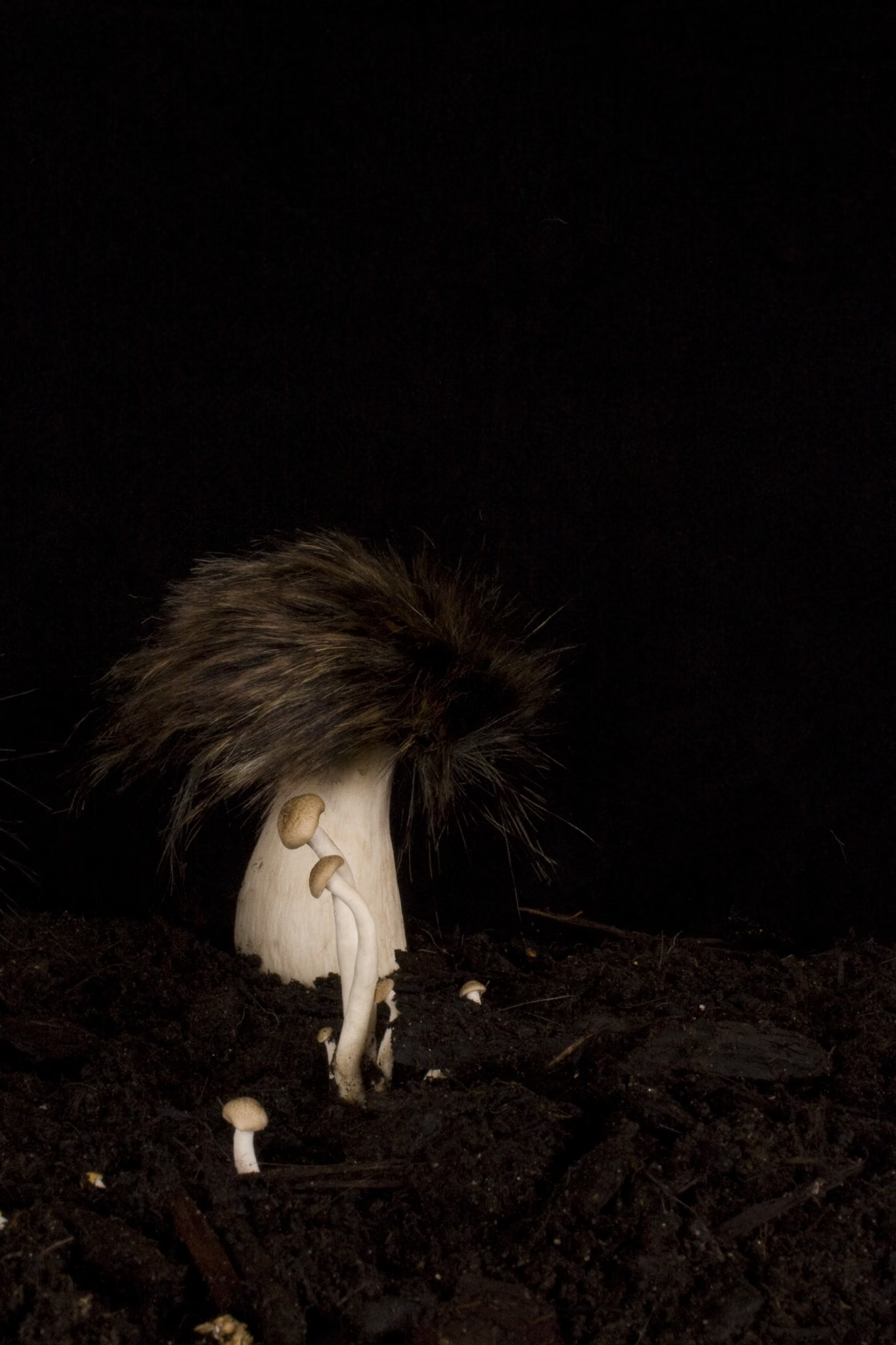 Fungi Fur.
Morphogenetic Experiments
Moving from speculation and critique into material experimentation.
Botanical Fur (2019)
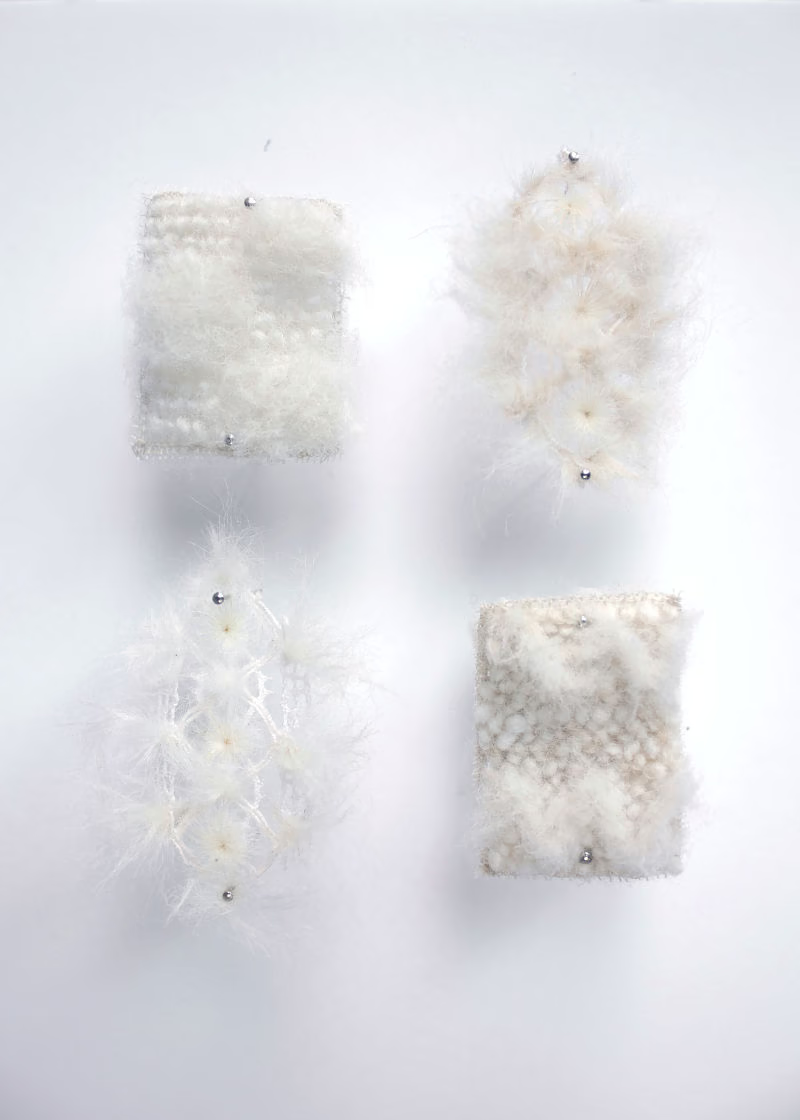
Botanical Fur is a practice-based study of natural plant fur – its plasticity, its tactility, what it can and cannot do as a material – in Cephalocereus senilis, a Mexican cactus.
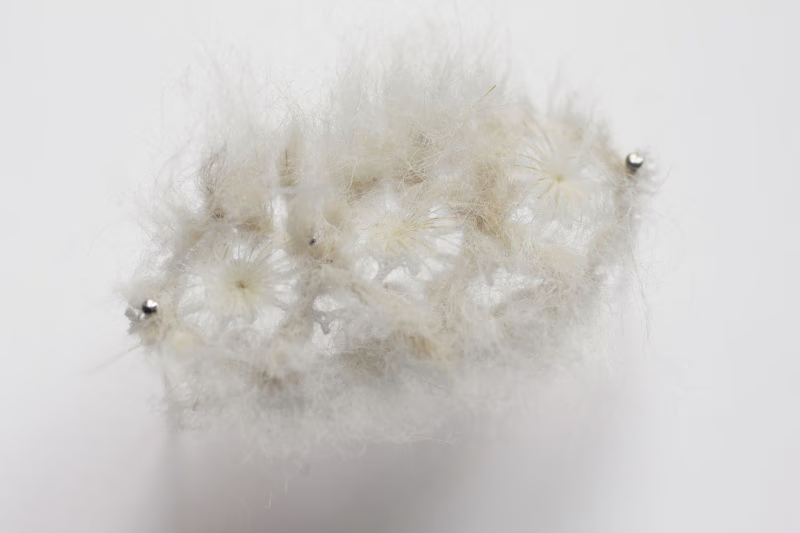
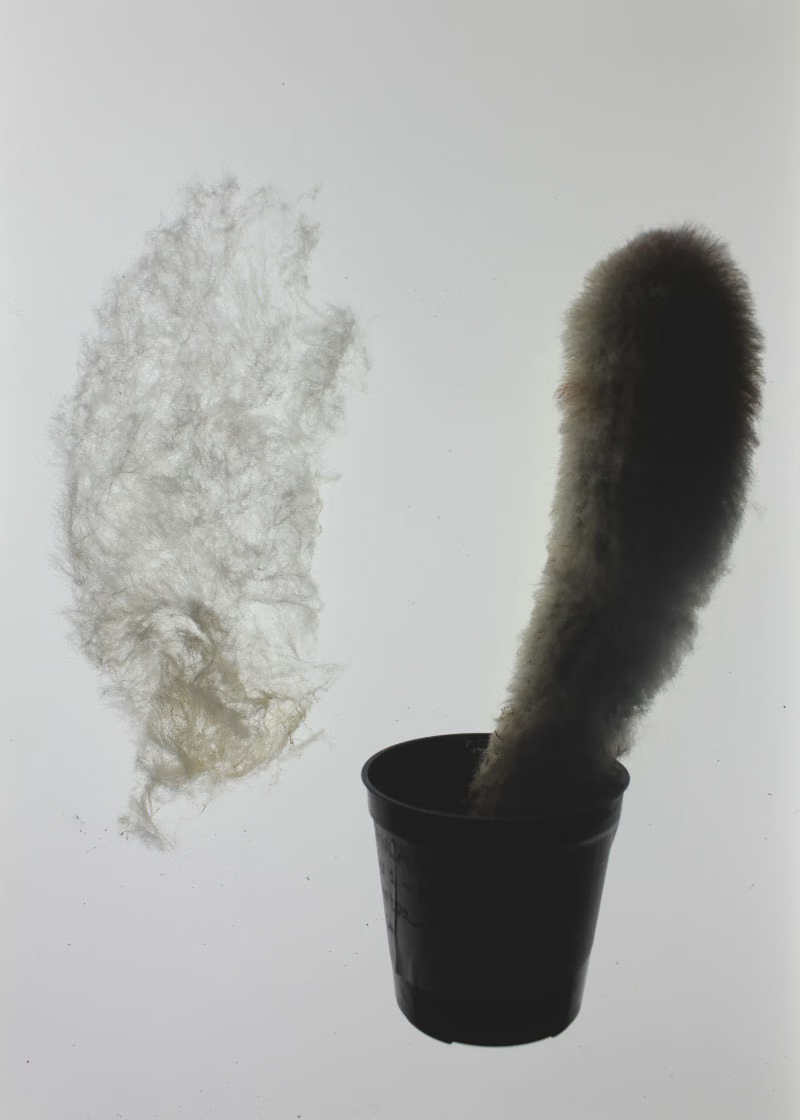 Cephalocereus senilis (Old Man Cactus), Botanical Fur, 2019. Fur taken from the plant that produced it. Hair evolved from spines, softness masking defence. Nine years of growth: ~0.28 grams, about the same as a pinch of salt.
What can we learn by working at the pace of a cactus?
Phenotypic plasticity – the ability of an organism to change its behaviour, morphology, or physiology in response to changing environmental conditions – is especially pronounced in plants, which cannot relocate. See: Plant Architecture and its Manipulation, edited by Colin Turnbull Plants can modulate position, growth, and density, forming a protective barrier between the organism and its environment. Plant hairs (trichomes), for instance, can defend against pests, act as biosensors and help the plant respond to shifts in temperature, humidity, and light. Could this adaptability inspire new structures and assembly techniques for textiles?
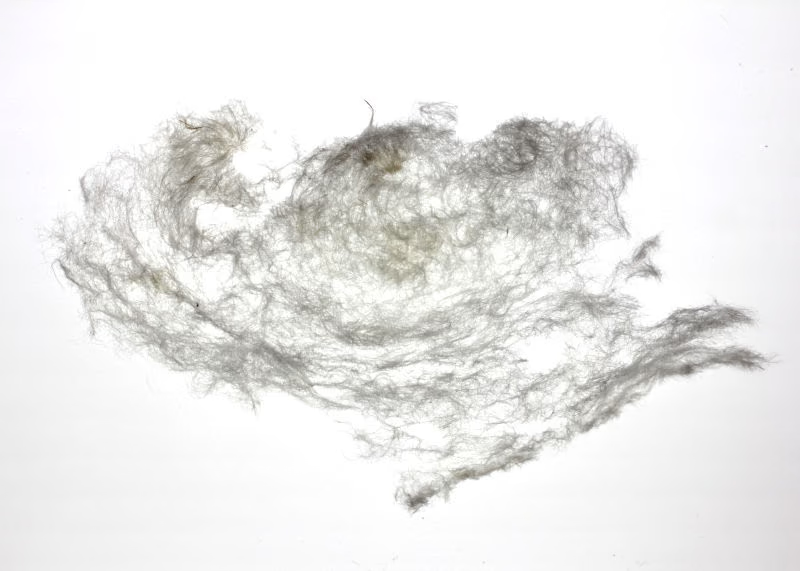 Miniature botanical fur collection. The samples are sized to echo the slow pace of cactus fur production – and the variable rhythms of growth this work asks us to respect. Botanical Fur, 2019
Geotropic Textiles (2019)
In this series of lab experiments, conducted across a range of plant species, I cross-bred tissue engineering techniques with textile patterning methods to grow textile-like root assemblies in vitro.
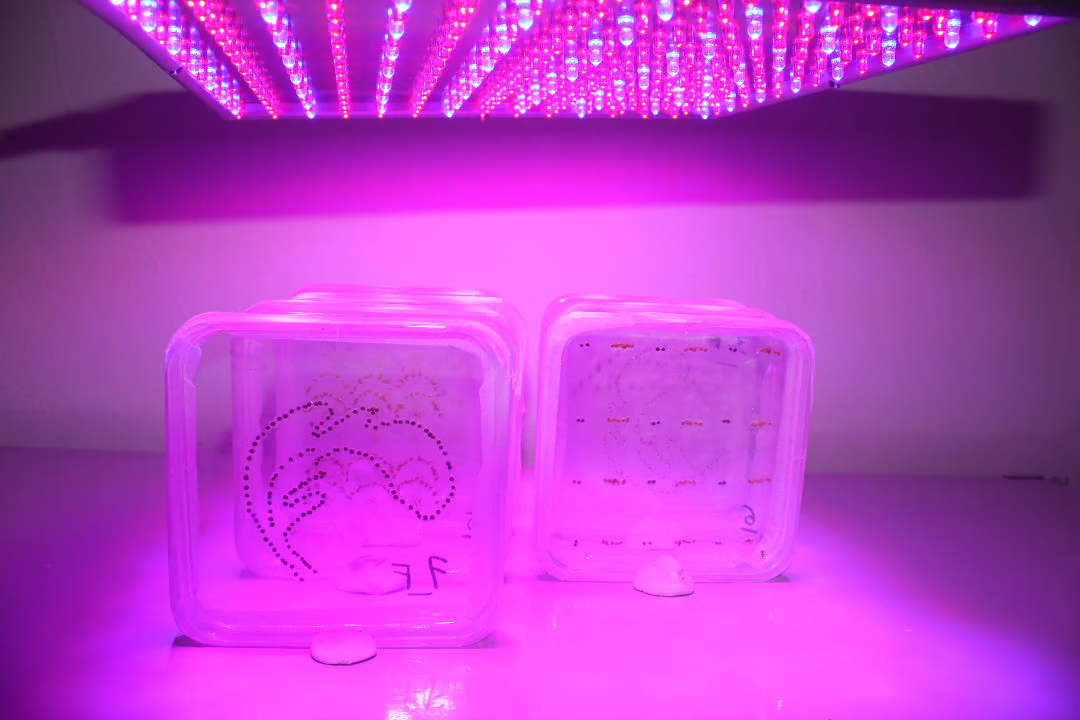 Testing the morphogenetic tropic response of root systems across a range of plant species. Geotropic Textiles, 2019.
Can plant roots be trained to grow textile-like structures?
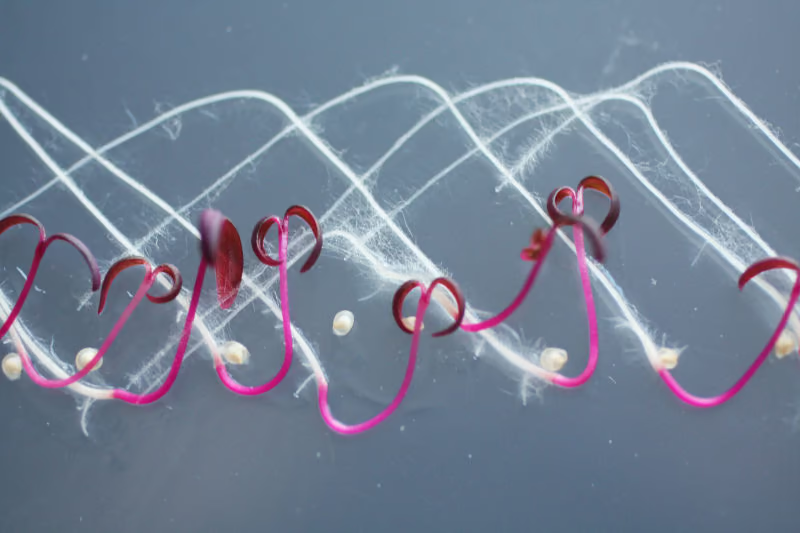
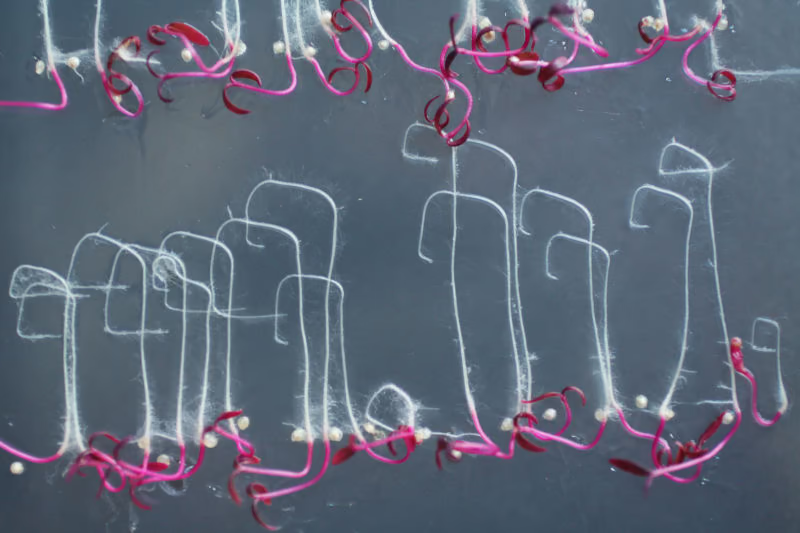
A growing plant orients its organs in response to sunlight and Earth’s gravity. Above ground, stems grow and bend towards a light source. Underground, plant roots grow downwards, towards the centre of the Earth. By working with these two responses — phototropic and geotropic — we can guide the growth of a plant’s shoots and roots. Akin to weaving threads on a loom, we can steer the roots to entangle in specific patterns. Tilting the vessel, and modulating the intensity, direction, and duration of grow lights — the techniques are simple; the resulting patterns are not.
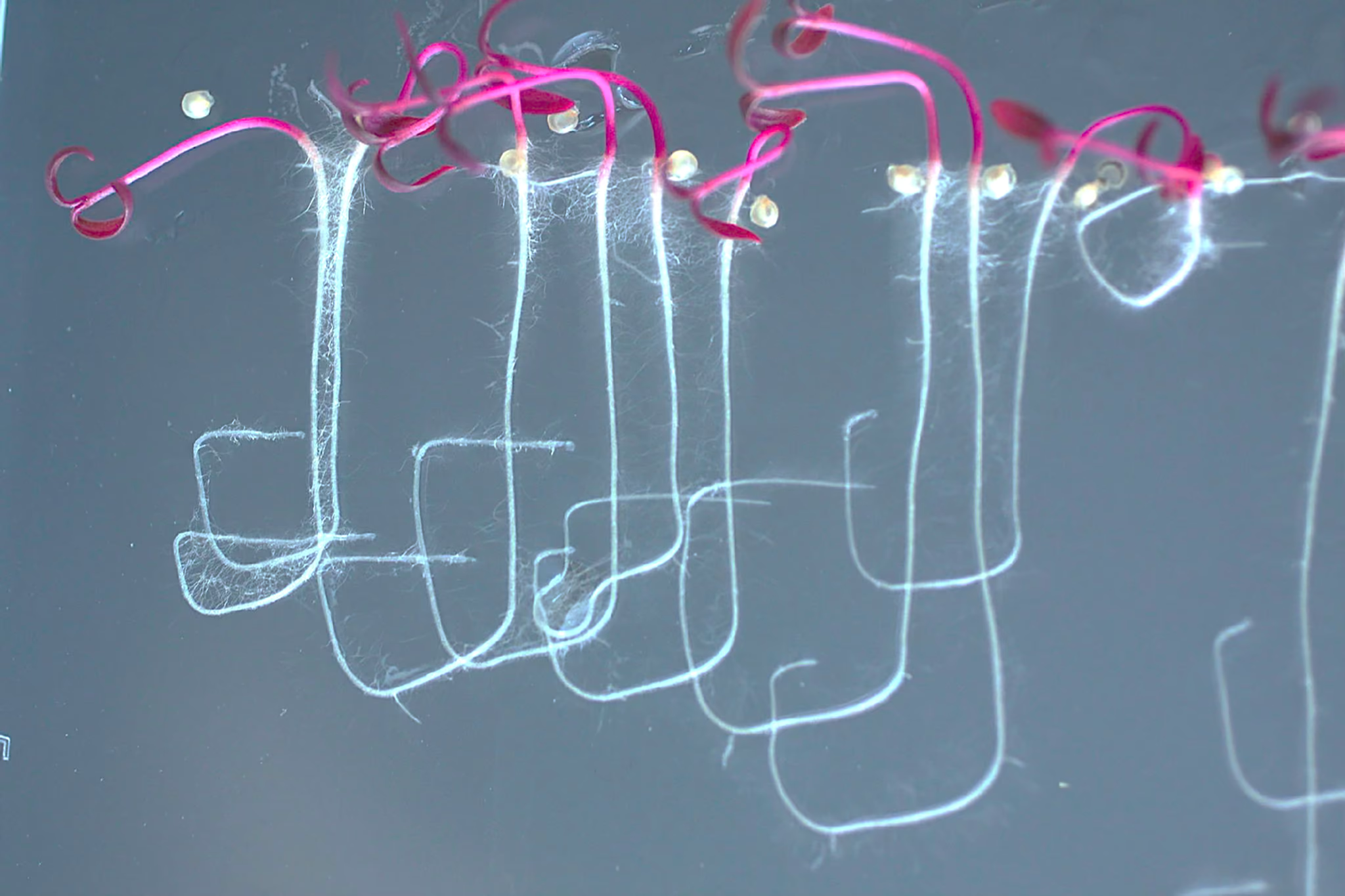 Grown on nutrient gel in rhizotron – a flat, transparent growth chamber — roots trace pale lines haloed with fine fuzz (root hairs), while shoots loop back toward the light source. Turning the chamber periodically shifts “down”, establishing gravity and light as competing pulls coaxing the roots into woven-like paths.
Geotropic Textiles, 2022
Botanical Craft (2015)
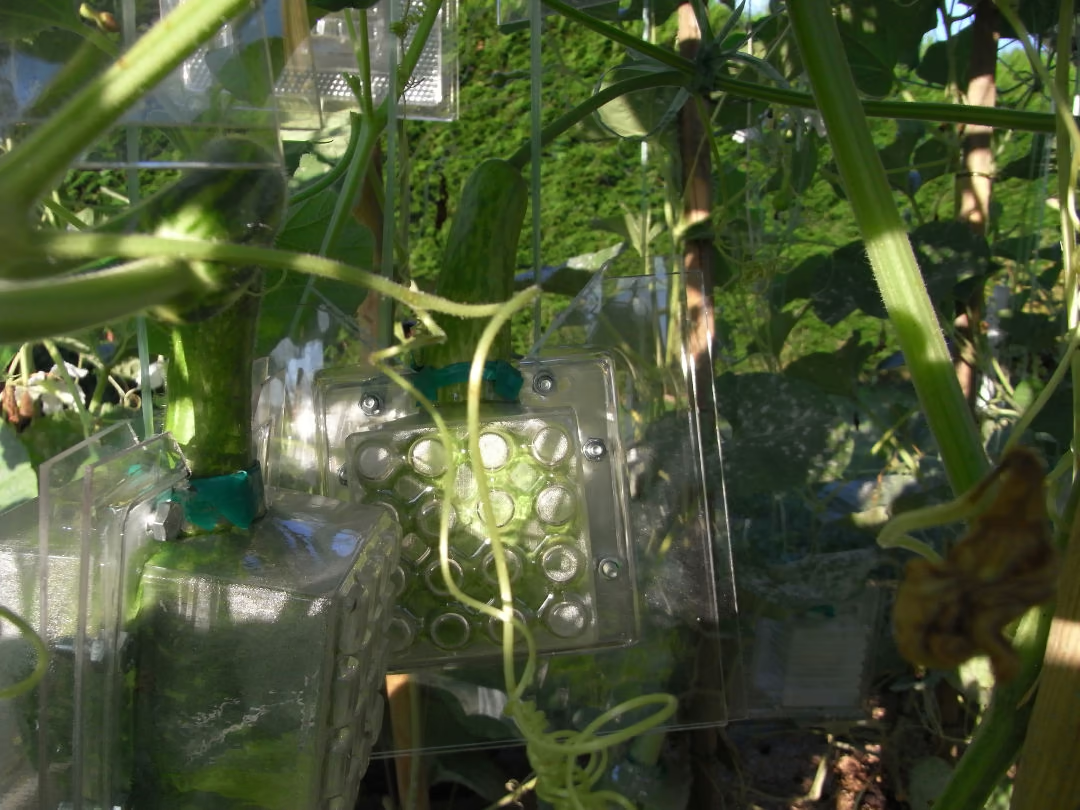
Curious about the environmental benefits of slow manufacturing, I research traditional horticultural techniques for growing ready-made products, instead of just raw materials.
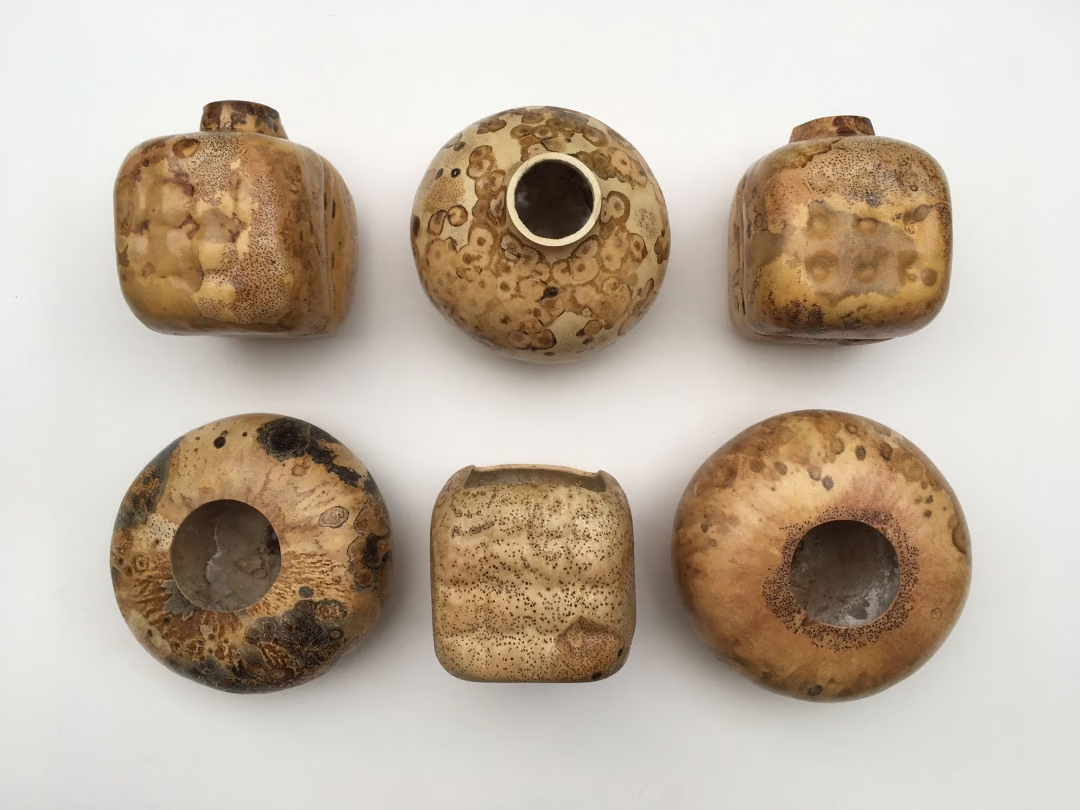
Can we grow ready-made objects in our gardens – at ambient temperature, on nature’s clock?
In contrast to rapid prototyping (where iterations take hours or days), slow manufacturing suggests recalibrating production models in line with nature’s rhythm. My approach draws on 18th-century Chinese horticultural practice, where moulded gourds circulated as courtly luxury objects (vessels, snuff bottles, cricket cages).
The moulds are screwed tight around the fruit. The plant grows into it; the final form is co-produced by constraint and growth. Checked, adjusted, tended: the work happens in the tangle. Once fully grown, the gourd can be harvested and will dry over several months, as the outer skin transforms into a wood-like material, and the inner flesh into a paper-like iridescent matter. The process from seeding the plant to fully-dried gourd can take up to ten months.
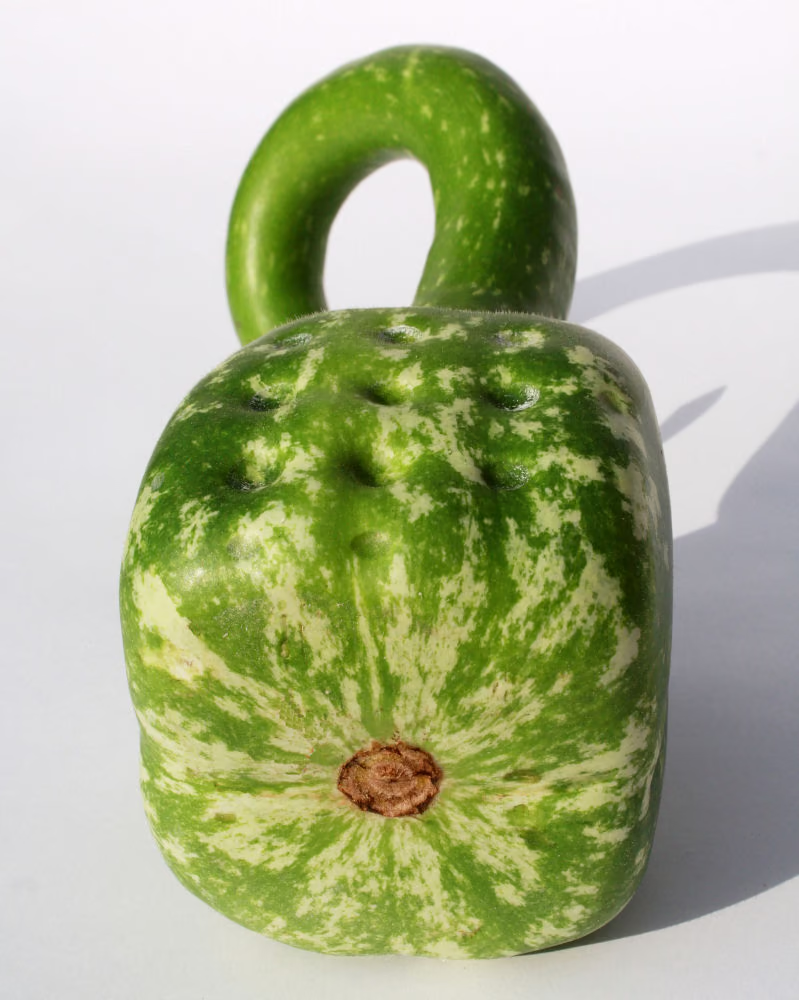 Freshly harvested moulded gourd.
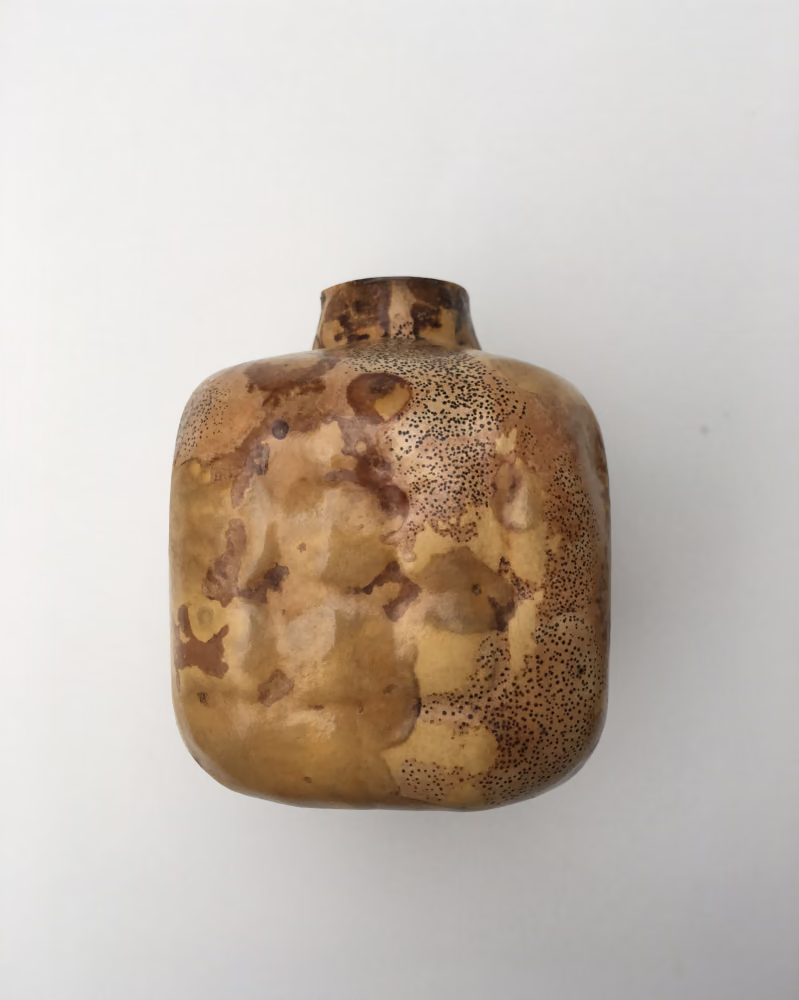 Dried gourd. Each object is unique – a recording of constrained growth; scars and blemishes become aesthetic evidence, the season’s marks made legible.
Fungal Protocols
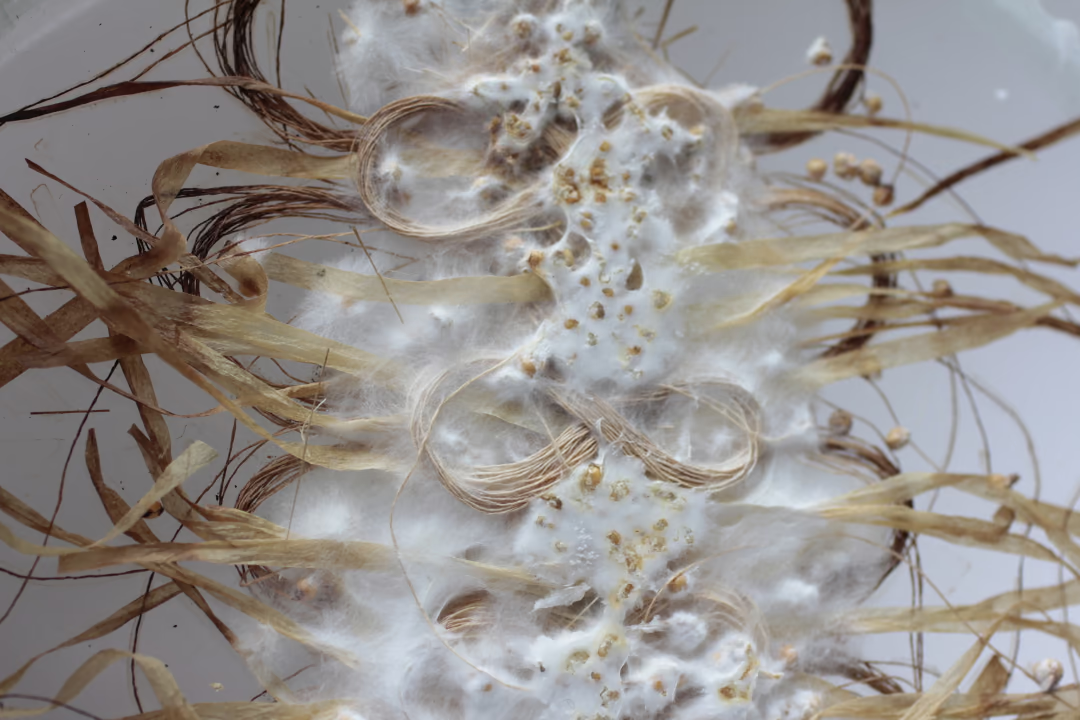
Mycelium Textiles (2016-2019)
What can a designer learn from a fungus?
By combining traditional textile know-how with the production of mycelium composites, I explore embellishment techniques for a post-petrol industry.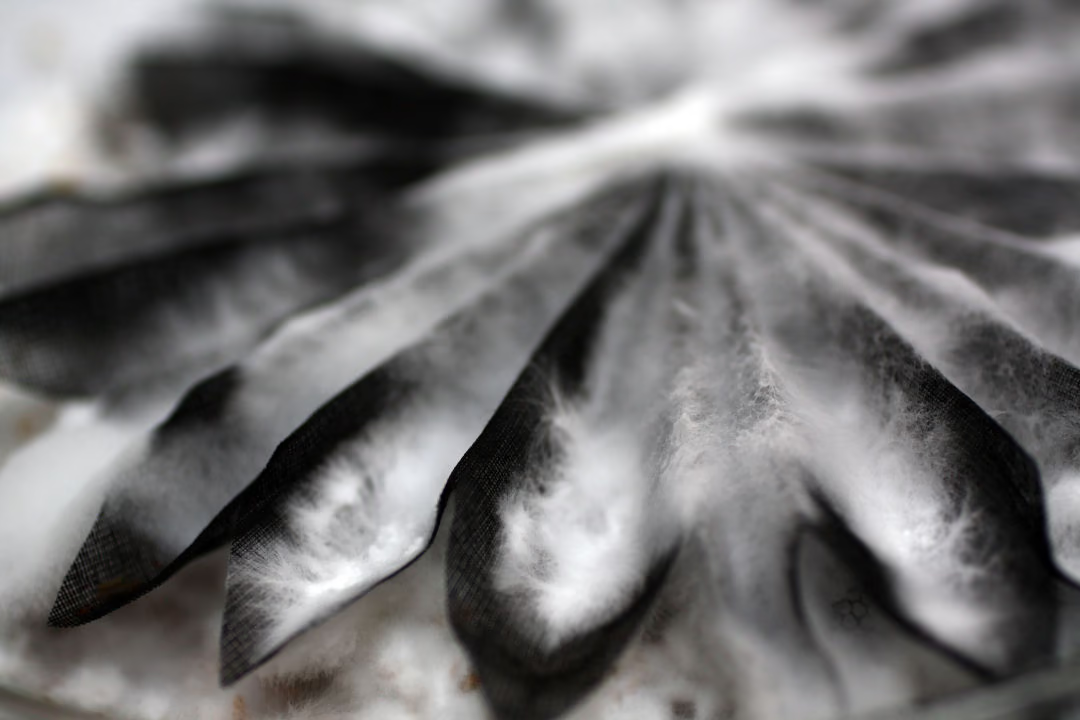 Pleats, detail of mycelium growing on a circular pleated cotton organza. Mycelium textiles, 2019
Mycelium – the threadlike network that makes up the body of a fungus – is a living, dynamic material that can digest its wooden substrate, colonise cotton, settle into the pleats’ valleys, creep up their ridges, arriving at its own design.
In sterile conditions, wood or textile can be inoculated with mycelium – comparable to adding a starter to sourdough. With careful tending over several weeks or months, its growth can be steered, encouraged or stopped.
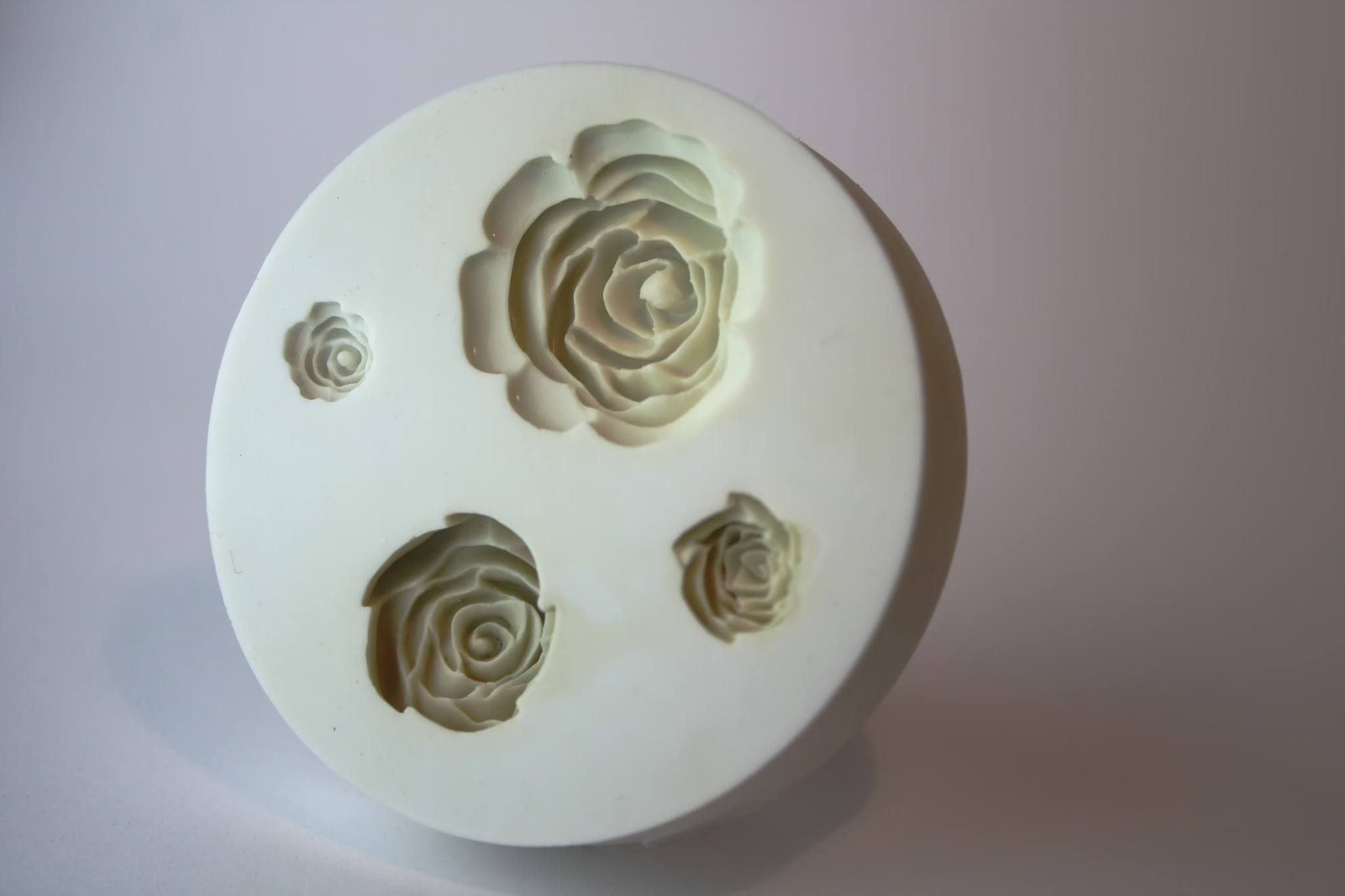 Self-patterning mycelium rubber. A mycelium culture colonised spent coffee grounds over three weeks, transforming it into a milky, flexible, rubber-like material. The floral patterns – rosettes, cavities, blistered craters, and folds – grew slowly on the surface as a record of the substrate’s response. Self-assembled by the mycelium culture, without any embossing or moulding. Mycelium Textiles, 2019.
The protocol is closer to gardening than to manufacture. The designer prepares conditions; the organism produces what it produces – often within those conditions, sometimes beyond them. What emerges is a material trace of the negotiation.
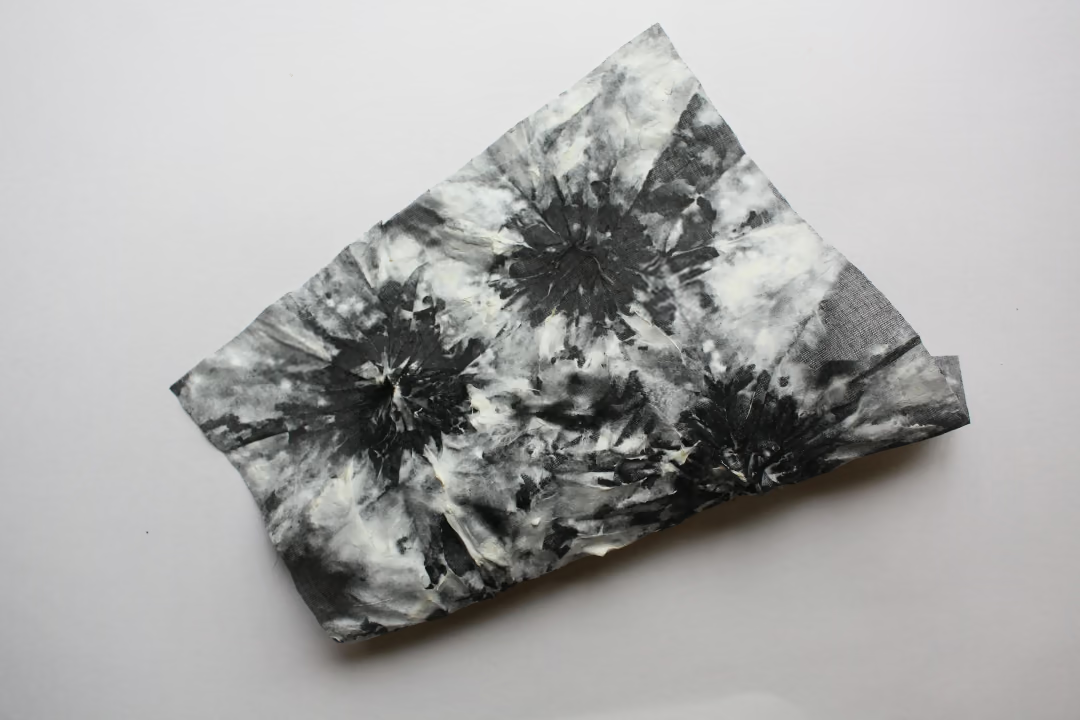 Tie-Grow. Mycelium colonising a circular pleated cotton organza. The pleats crease the mycelium’s habitat into a topology of microclimates and constraints; the white bloom settles, thickening and drifting across folds. Mycelium Textiles, 2019.
Made in Soil (2022)
A collaborative design inquiry with Miriam Josi and Stella Lee Prowse (Aléa), grounded in the potential of mycelia to regenerate and remediate soils and contribute to nurturing biodiversity. In 2021, Aléa developed a fabrication process that uses mycelium and local waste substrates to grow objects in wild soil. Made in Soil expands on this process of creating new materials from organic waste, without energy-intensive sterilisation and plastic moulds. The result: a series of miniature chairs, grown in soil.
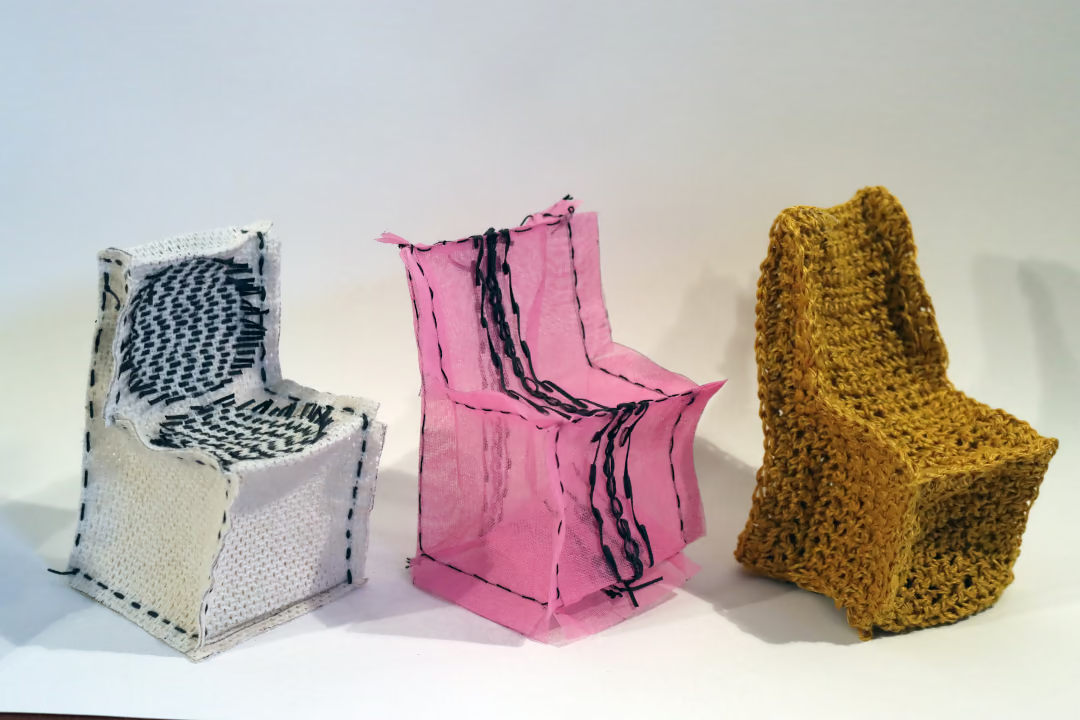 Preparation of Textile Moulds. Made in Soil, 2022.
What might a chair look like, if it were grown in soil?
By stitching, pleating, and shaping fabric, we have explored textile as a skin – an interface guiding the mycelium’s growth. The textile becomes a soft digestive mould, hosted in soil: a medium for shaping and harvesting mycelium-grown artifacts at ambient temperature.
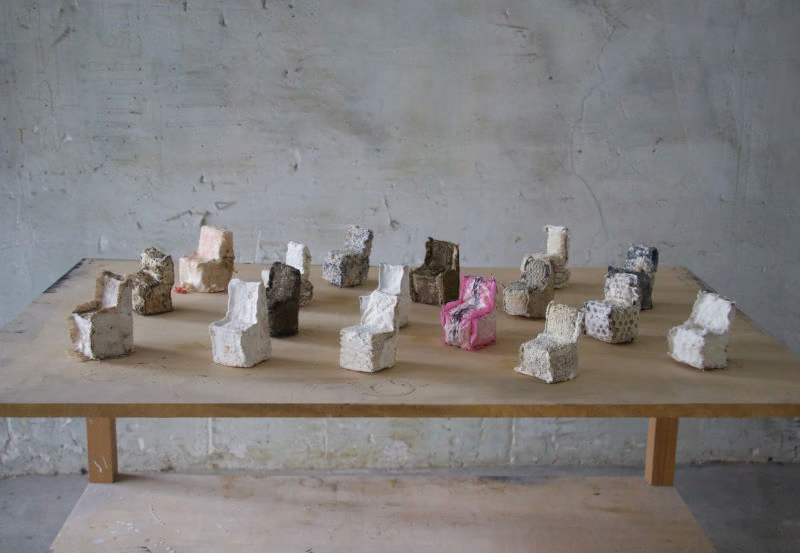
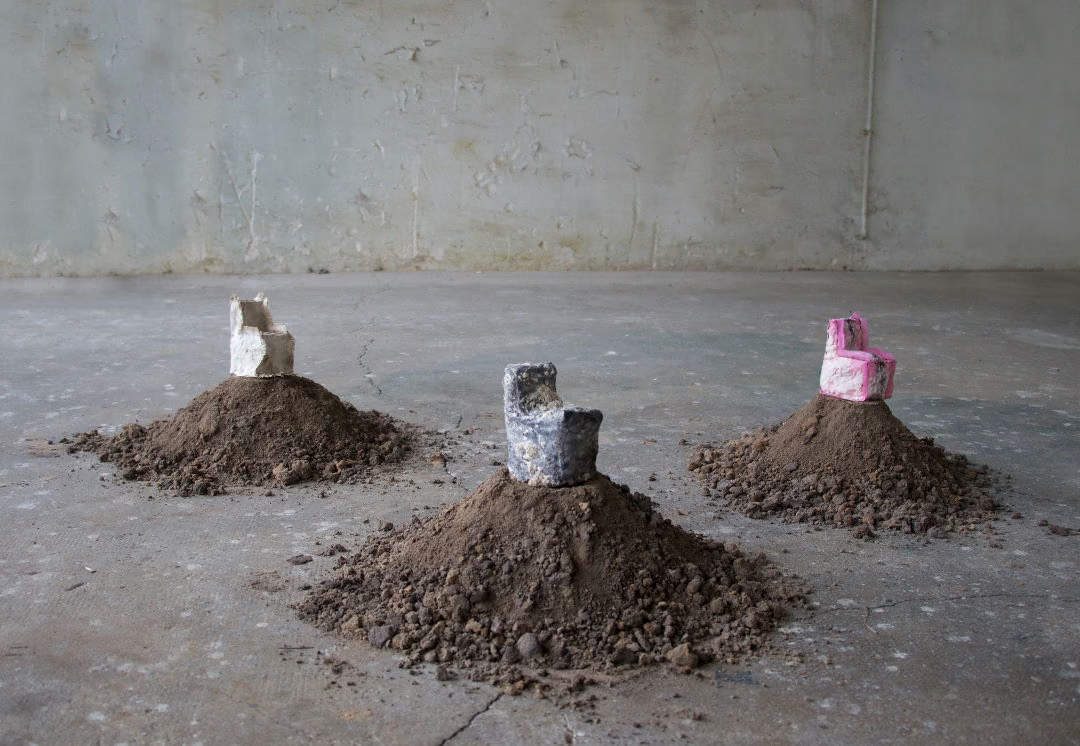 Made in Soil exhibited at Landscapes of Design, Frac Centre-Val de Loire, France. Left: the full collection of miniature chairs – each grown in a different substrate, each unique. Right: three chairs returned to the soil they were grown from.2022.
Harvested Assemblies (2025)
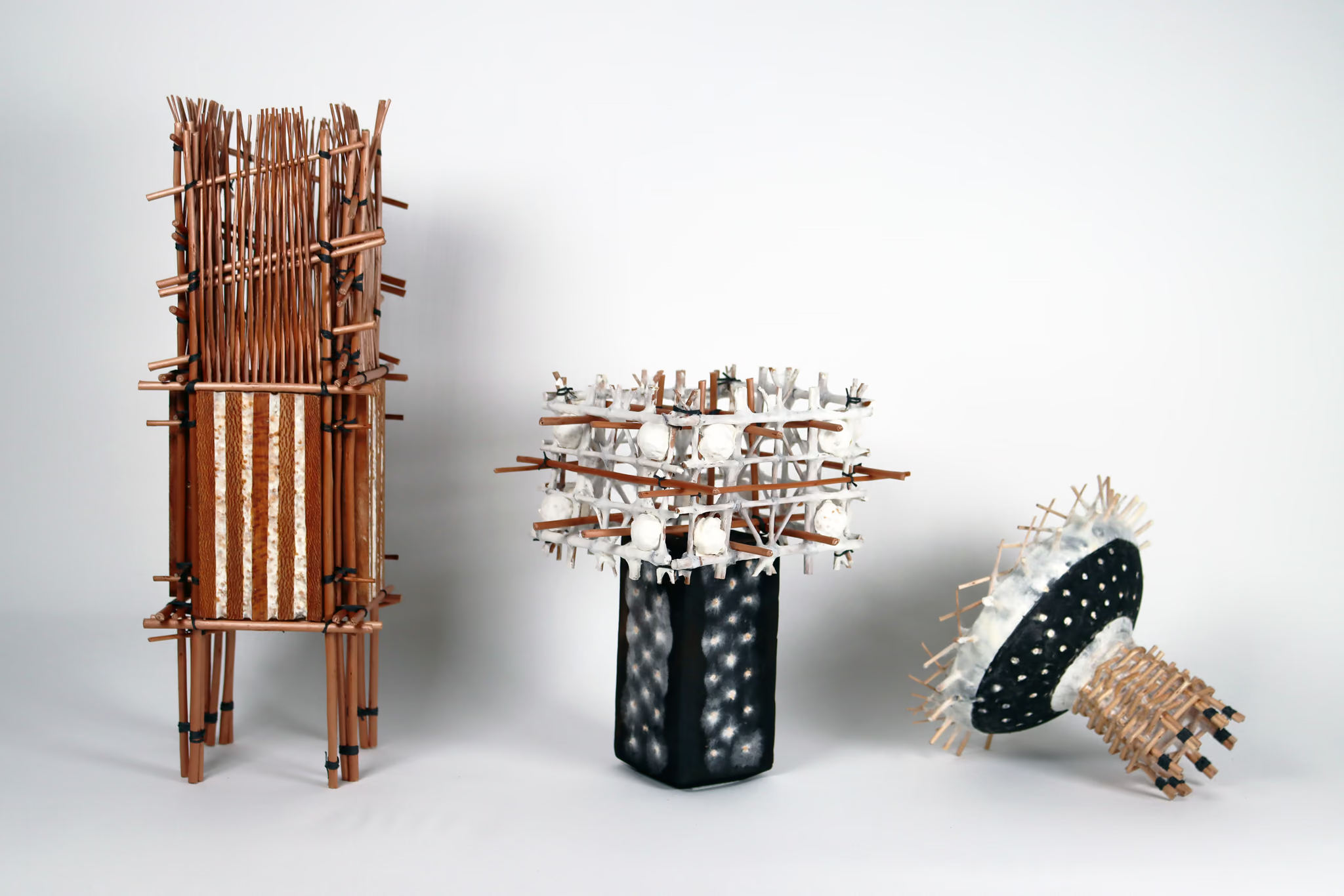
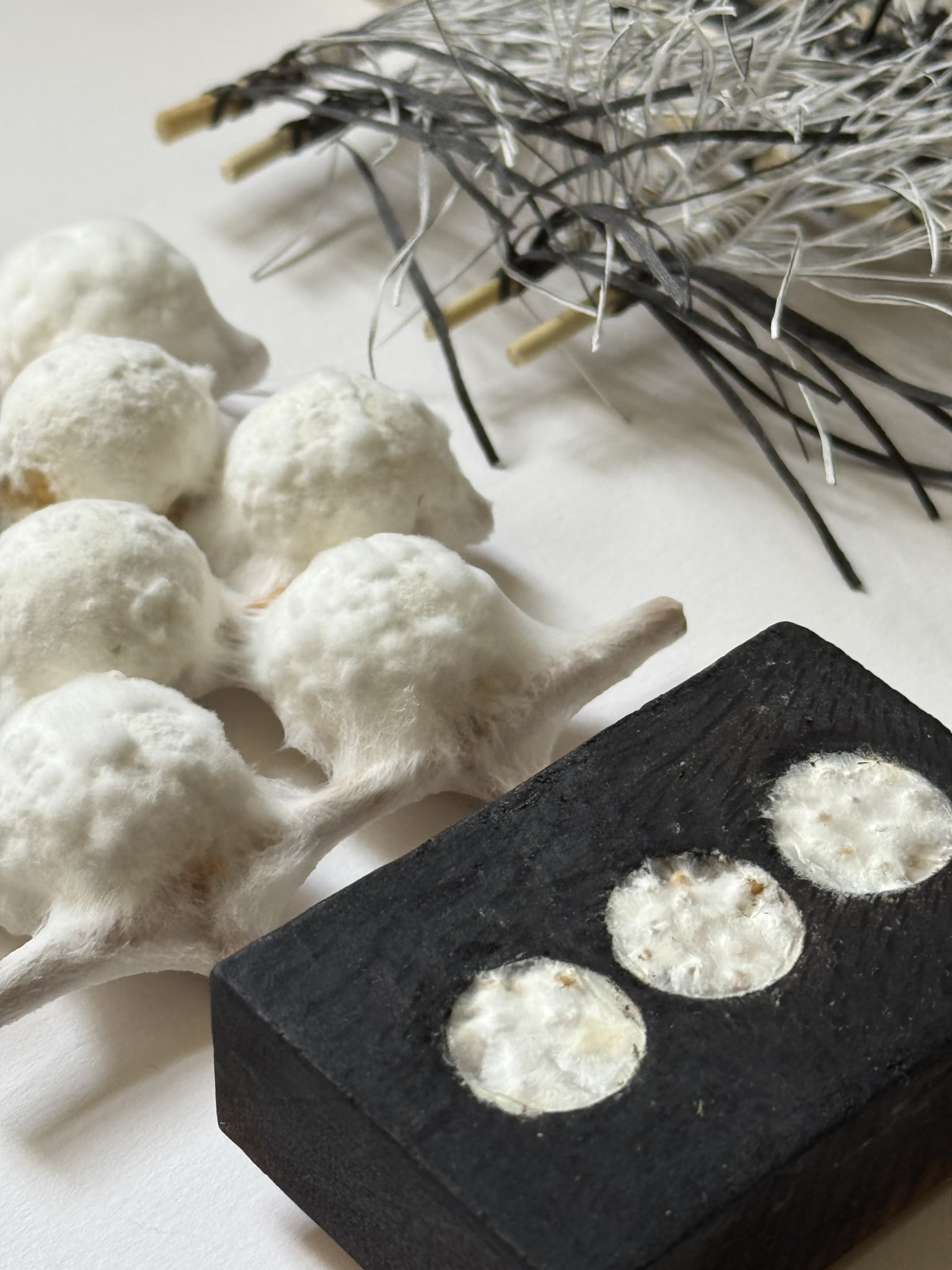 Bio-marquetry prototype, series one, Harvested Assemblies, 2025.
Investigating what happens when mycelium growth meets traditional basket weaving.
Can mycelium growth protocols lead to the invention of new craft typologies?
Mycelium can digest and transform harvested materials – fallen trees, garden waste, organic willow, deadstock textiles. I incorporate this capacity into weaving and woodwork, crafting bio-assemblies. Colonisation patterns grow on their surface, as mycelium fills, expands and (re-)assembles wood and fabric. New materials emerge from fungal behaviour.
At the intersection of hand-made practices (carving, weaving, inlay) and grow-made processes (digestion, colonisation, transformation), a new hybrid approach to craft and design is beginning to emerge. Bio-informed, bio-assembled, designed (for and with) living systems.
Most photographs in this essay are made by Carole Collet. With thanks to Yesenia Thibault-Picazo and Immatters for Botanical Fur and Lace Assembly, and Aléa for Made in Soil.
🜛