Edible Alchemy
A material investigation – from plant pigment to textile, taste, and micro-electricity.
Tracing traditional and potential uses of two plants – flax and aronia – through linen composites and Temporary PhotoElectric Digestopians (TpED), brought to the same table.
Including edited excerpts from the Resilients Handbook.
Plants are increasingly valued for what they might yield – a substance, a material, a market. How can we celebrate plants for what they are, instead of just what they can become?
Seen through a lens of cultural and ecological interconnection, plants reveal forms of resilience and adaptability that exceed their utilitarian or monetary value. When we attend to a plant – its compounds and processes, its uses, its migrations and material affordances – we can start to reimagine how we relate to it, and argue for its continued flourishing.
Flax (Linum usitatissimum) has shaped European landscapes and livelihoods for millennia. Cultivated for ornamental gardens, food, medicine, furniture stains, inks, and linen, it has covered remarkable ground: laminated linen was the armour of choice in ancient Greece; today, its high-performance composites are used in cars, bikes, and tennis rackets.
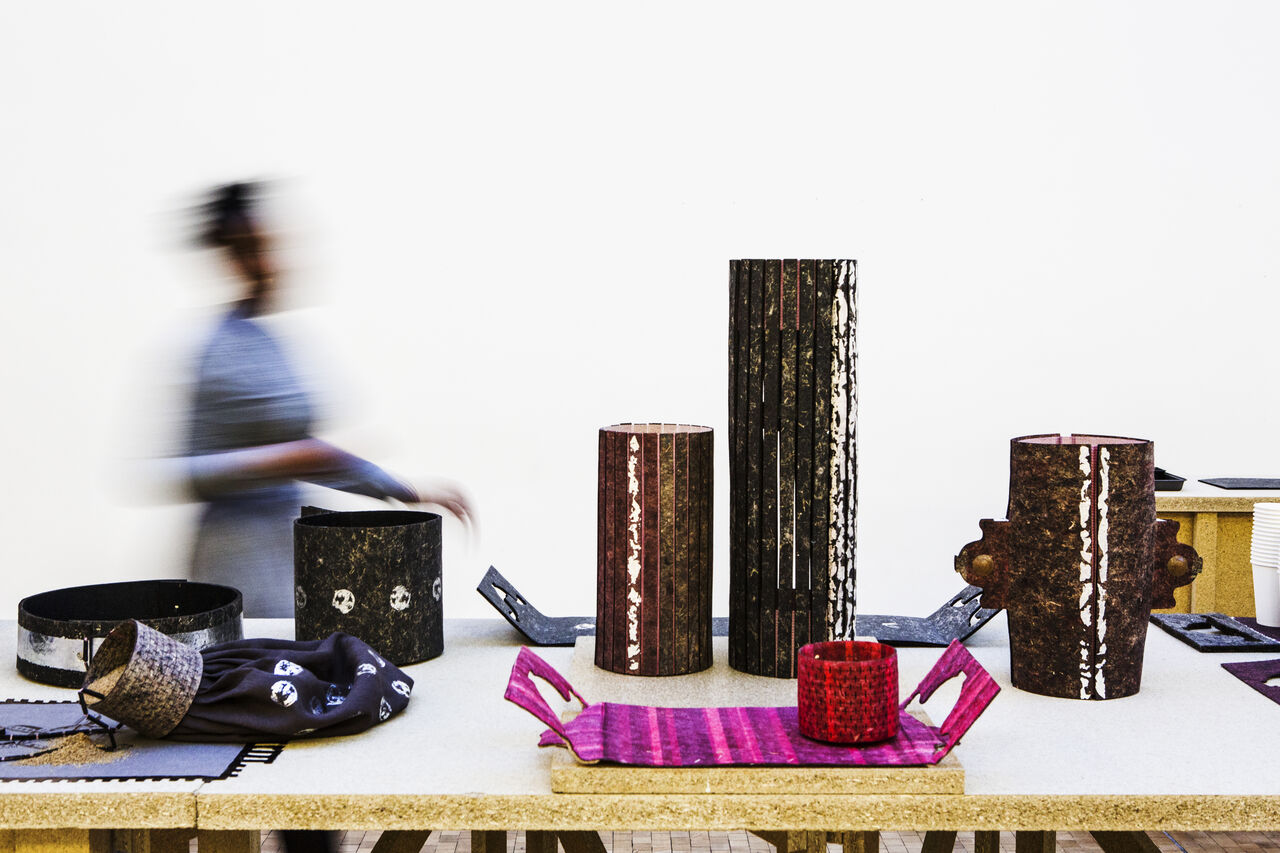 Edible Alchemy: Table Landscape, 2012. Linen board and new linen composites for sustainable furniture and tableware, at the Edible Alchemy Aperolab at Central Saint Martins, London, UK. Photo: Misha Haller
Where flax offered structural resilience, aronia supplied something more volatile: colour, electricity, the body's own chemistry. A deciduous shrub native to North America, the chokeberry (Aronia melanocarpa) was introduced to Russia in the early 1900s and subsequently cultivated throughout central and eastern Europe. Exceptionally resistant to pollution and pests, its berries have high levels of polyphenolic compounds, including anthocyanins, which the plant uses to filter sunlight, and tannins. Consumed as juice, jam, jelly, beer, wine, and vodka, they are still studied for their antioxidant and health-related properties. Their deep blue-violet pigment can be extracted to produce a natural textile dye – and, in Edible Alchemy, an edible solar cell.
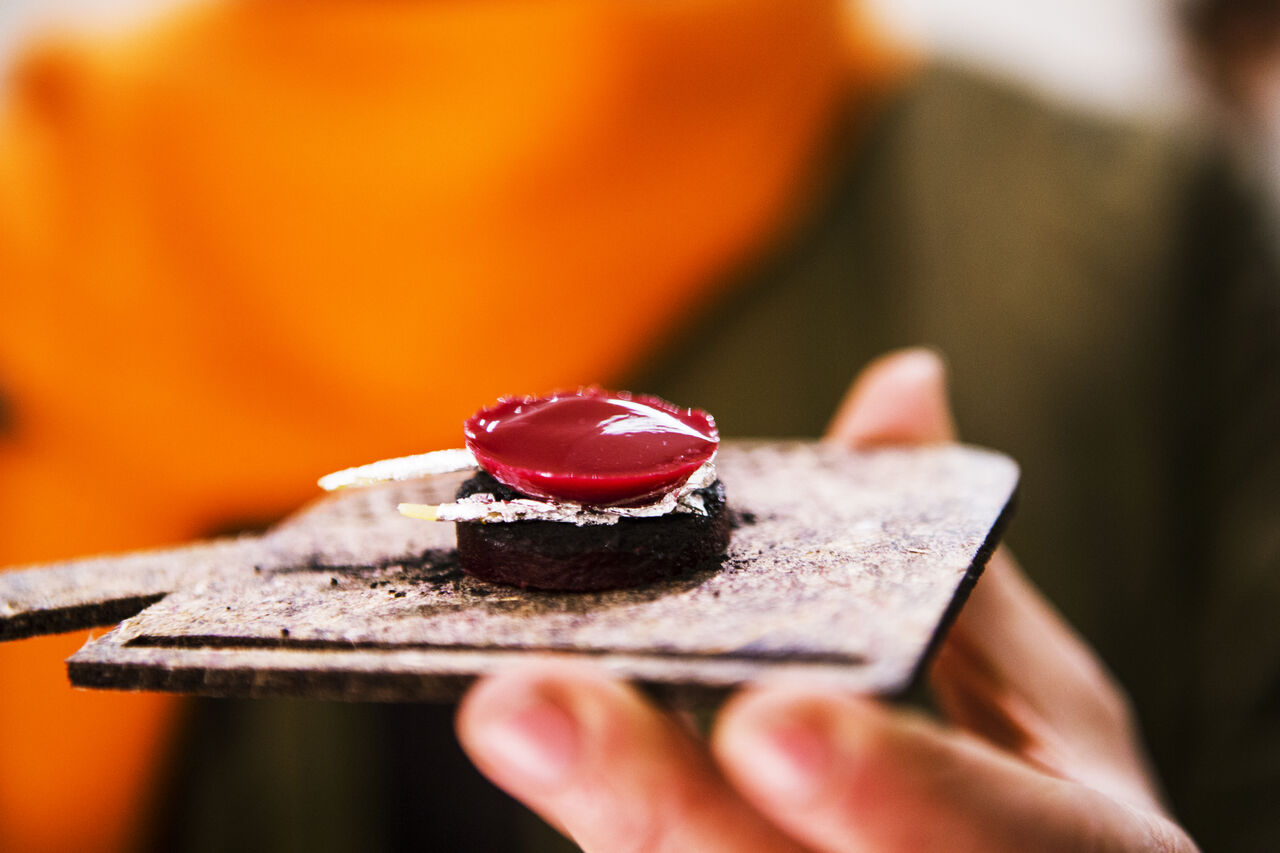
We used aronia berries Baroa belaobara: berryapple to produce an edible-material, dye-sensitised photovoltaic technology. Served as e-tapas, these tiny solar experiments were tasted and tested on the tongue, producing micro-electrical energy through a temporary circuit of light, body, instrument, and aronia pigment.
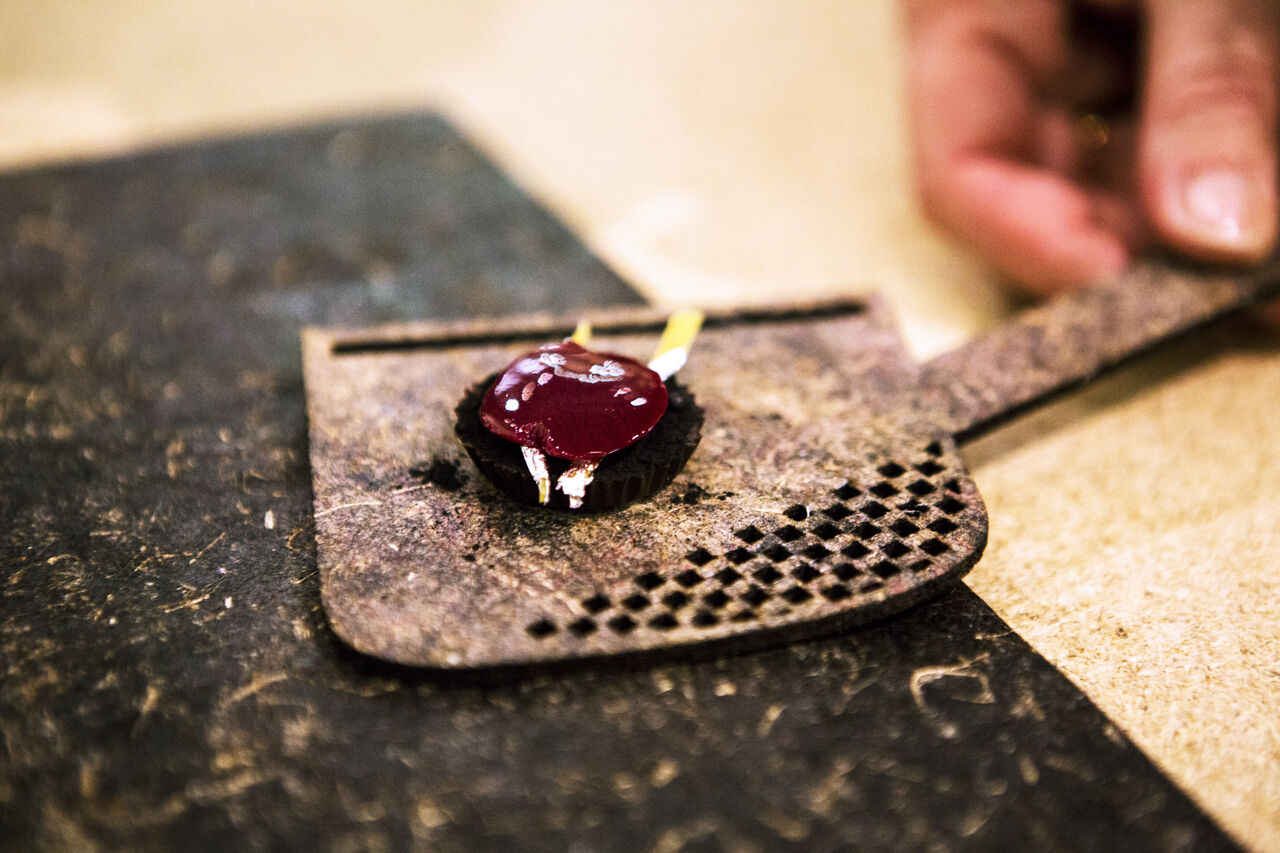 Prototype of an edible-material solar cell on a linen board, Edible Alchemy Public workshop, 2013. Developed at the ‘Temporary PhotoElectric Digestopians’ (TpED) Worklabs in Belgium, Germany and the UK. Photo: Misha Haller
See also Designing (for and with) Living Systems
❦